The Oranges of Valencia
After a quick taxi ride from the airport, I arrived at the hostel in the old quarter of Valencia late on Friday evening. To reach it, the driver had to pull down a little alleyway, and in letting me out directly in front of the door he soon created something of a jam. I quickly paid and moved away, but the driver seemed to be in no hurry to be on his way. He sauntered over to the car immediately behind his and began chatting to the woman at the wheel!
The Home Hostel was a cosy little pile of rooms painted in bright colours of lime, orange and gold. It felt more like home than my last flat. A mix of plush and functional furniture, a fully equipped kitchen and refrigerator, a TV and DVD player, and assorted hideaways covered with cushions instantly settled any worries about the value for money of my accommodation for the next several days. The woman at the ‘desk’, Anna, and the rest of the staff behaved with the same blend of comfy familiarity and professionalism as the space itself.
I settled into my room and wandered back down to the common area to meet my flatmates for the weekend. Quite a mixed bunch — local Spanish staff, a couple of Englishmen, two Irishmen, assorted Aussies, a Spanish couple, Finnish girls — gosh! Three girls from New Zealand invited me into one of the quiet nooks for a beer and a chatter. Our conversation covered the usual points — where have you been, where are you going, where are you based. This merry trio had arrived in London a few months earlier and had just started taking little side trips around the Continent.
An English fellow in his late twenties joined us on the sofa and started unspooling his life’s story for our amusement. He kept ducking his chin into the high collar of his jumper as he told us of his travels in South America and Spain. This fellow’s cheeky energy caught the eye of the only single member of the Kiwi Three, and soon they were poking each other and chortling. Well done, mate.
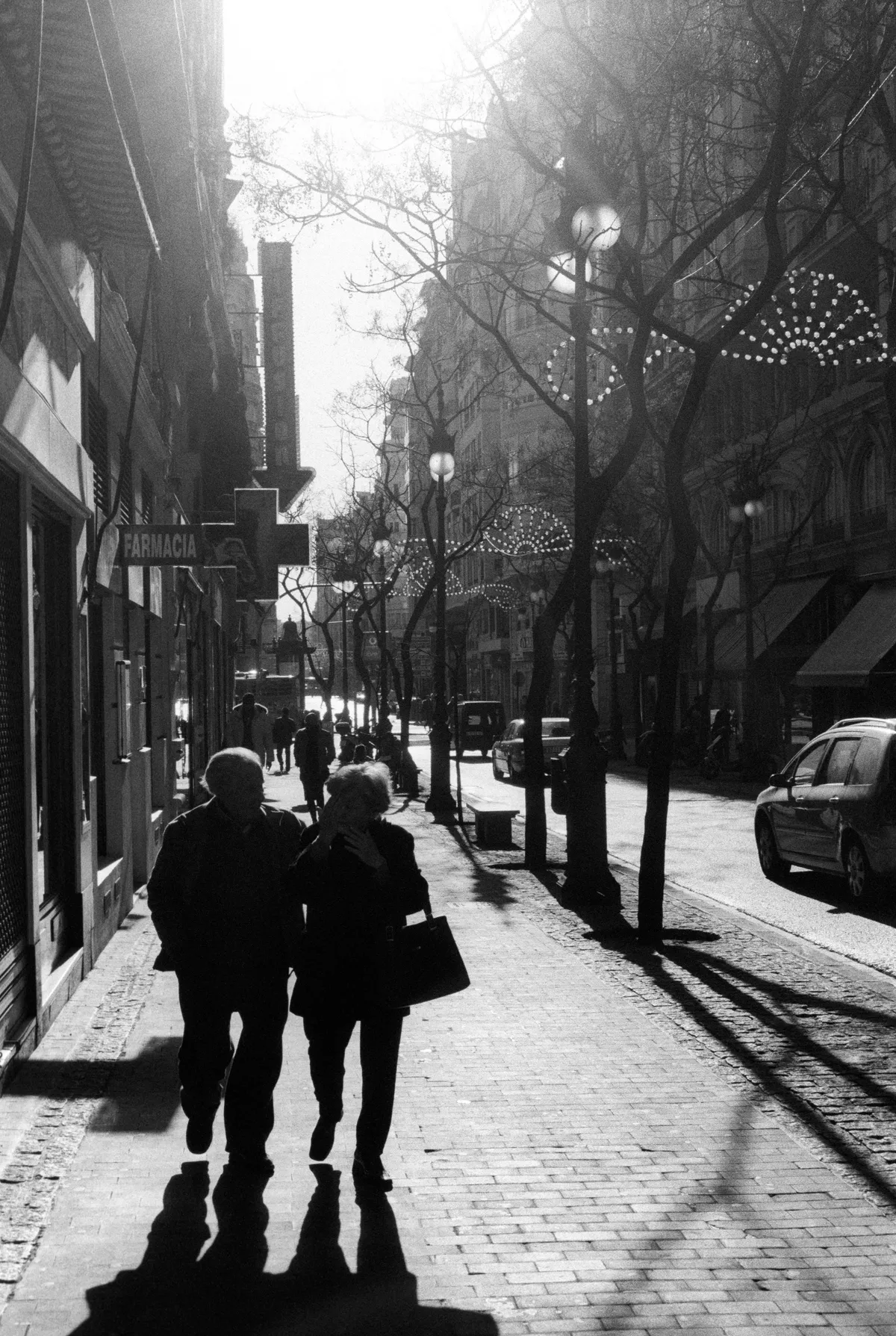
Around midnight the hostel’s common room closed up and we all went out into the mellow Friday night for some fun. The people of Valencia — and of all hot countries, I should think — come alive at night. Regular rows of streetlamps illuminate the thoroughfares and alleyways with an even, amber light. This glow frosts the leafless trees, which are laden with dried white grapes, and softens the air.
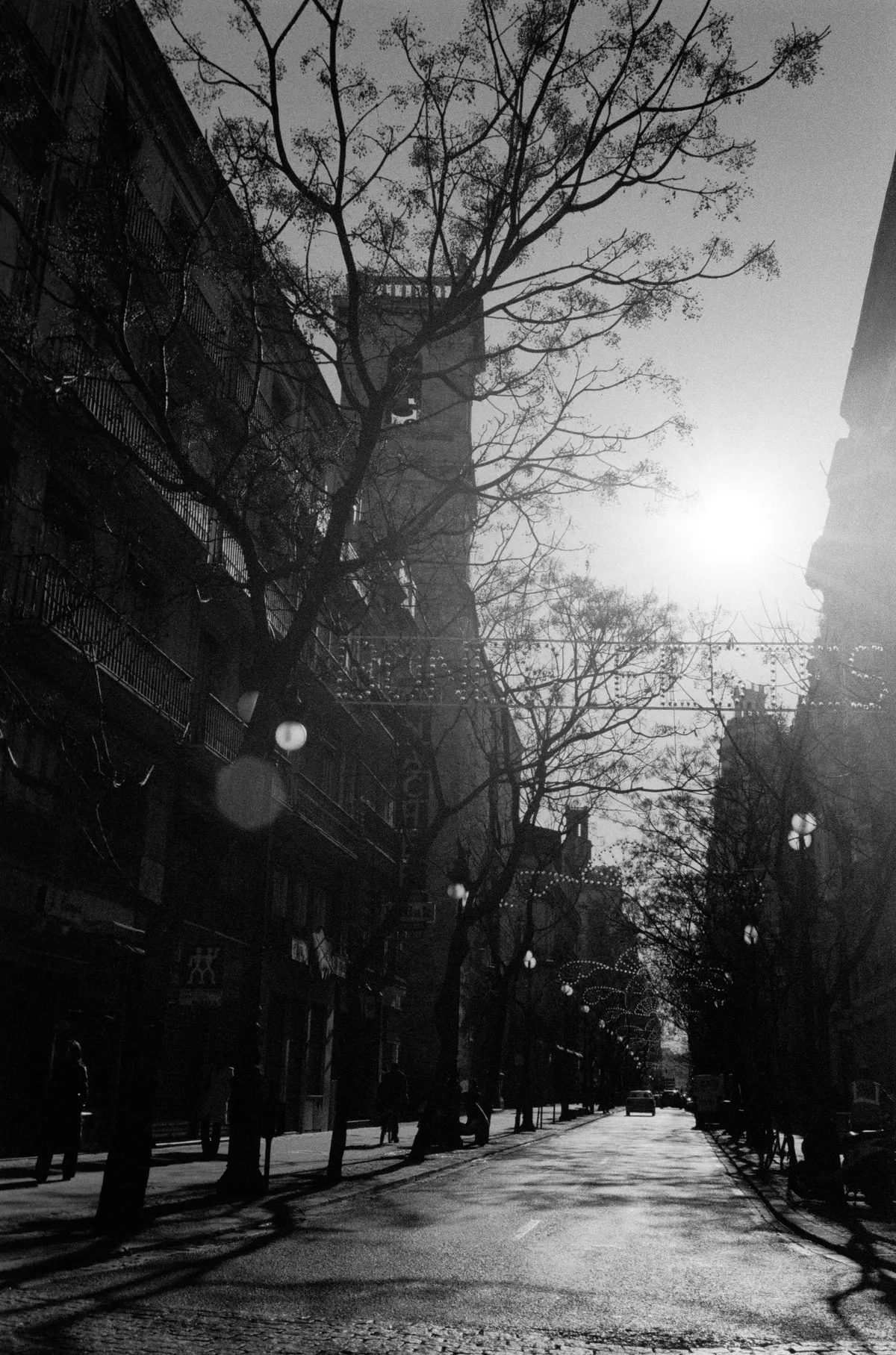
Making right turns and left turns every minute, I soon lost my orientation. We depended on Anna to lead us to our destination — a bar-club for drinks and some dancing!
The bar’s chilled vibe extended to the dance floor. For the first hour the DJ spun a slightly randy compilation of Spanish and English tunes, and I had fun observing the scene. Cliques and wordless mini-dramas whirled around me like little solar systems with shifting centres of gravity. More than once I could hear English — “Oh, I have a boyfriend” — but most words passed through my brain on the same instinctual wave as the music: felt but not quite understood. I rocked in my own orbit with a Corona in one hand and the other twisting with the bend of the notes. So delightful to abandon thought and give myself over to the moment. That’s what I love about dancing: it’s all about chemistry, subtle cues and simply being in space. Time is for, well, another time, and not the dance floor.
After the first hour, the DJ started in with the salsa. None of us were any good, but it was damn fun. Anna took pity on me and gave me a spin around the floor, though I’m not sure whether it was her lead or the third Corona that kept me aloft. Our band of hostel-mates kept at it until the wee hours and returned to our beds not too long after 4am. None of us were drunk, but we all traipsed back with merry, friendly talk and an appreciation for the mingled pleasures of music and good company.
I woke rather late the next morning. The Japanese fellow who had staffed the desk overnight lay face down on the sofa with his hand limply resting against a bowl of cigarette ash. I gathered my bag of toiletries and went through to the bathroom.
I thought no one else was about yet, but someone had neatly arrayed a string of cosmetics on the countertop above the sink. Since the sink, toilet and showers were co-ed, I thought nothing of lathering my face with cream and getting on with my routine.
After three scrapes of the razor, the brightly painted wooden door clapped open against the wall and a slender blonde-haired girl walked in. She must have left mid-application, since her face was bland and smooth from face cream and her hair mussed. I gave a polite smile and continued the delicate work of shaving, pyjama top kept on despite the risk of a foamy mess.
The girl didn’t take much notice of me as she painted, stared intently at herself, painted some more, stared, blended and smudged, stared and so on. This forced intimacy felt very strange indeed, and I couldn’t quite concentrate on my shaving enough to avoid some bloodshed. Actually, I was amazed at this girl’s total absorption in putting her face on. And then she started in with her hair!
Before immersing myself in the visceral pleasures of the Mercat Central, I took my breakfast at a greasy spoon just across the road called Freidura Boatella Central Cerveceria. The inside dining area was confined to a row of six stools along a chrome countertop. Four regulars — ancient men in caps and carpet-like jumpers — sat sipping their coffees while eyeing the assorted hot foods under glass. These piles of economical nibbles were mostly sausages, eggs, hams, onions, rice, potatoes and curious blends thereof.
The proprietor of the shop seemed a young sprite next to the fixed points on the stools, although he looked not a day under 55. The man whirled about and served his customers with healthy dollops of food and bright chatter. My Spanish is non-existent, and yet I realised he capped his phrases with “amigos” more than one probably would in everyday speech. This man engaged in a monologue of good manners and seemed so happy in his state of perpetual motion.
His kindly tones didn’t falter at my stammering Spanish and hand-pointing. Through a cunning combination of mumbling and gesturing on my part, he brought me a plate of scrambled eggs, ham and spicy mushrooms, and a café con leche. He wished me “buen provecho” and spun about to administer another round of shots of liquor into the old men’s coffees.
The fellow to my left was younger than the median age of the place and asked, “Ah, you speak English?” He took another gulp of his morning beer.
“Yes.”
“I learned English in Mallorca. Lot of summers there.”
“Ah, you learned it from the tourists?”
He smiled a naughty grin that exposed some pretty horrific dentistry. “From the girls. Lots of English girlfriends.”
We laughed, but I winced at the thought of anything touching that mouth. Blech. Still, he was friendly …
“Well, Spanish women are very beautiful.” I tried to charm and compliment.
“Yeah, but tough.”
“Tough?”
“Tough, very strong. Hard to, to know.”
“Feisty? That’s OK, I rather like feisty.”
“Too hard, my friend. That’s too hard.”
“Well, to be fair, English women are just as complicated. Perhaps they’re tough everywhere.”
The man finished his beer and gave me a friendly slap on the back.
My senses, which usually summon up a Pavlovian response at the sight of a well-stocked Sainsbury’s or Waitrose in London, couldn’t quite grasp the sheer plenitude on offer at the Mercat Central.
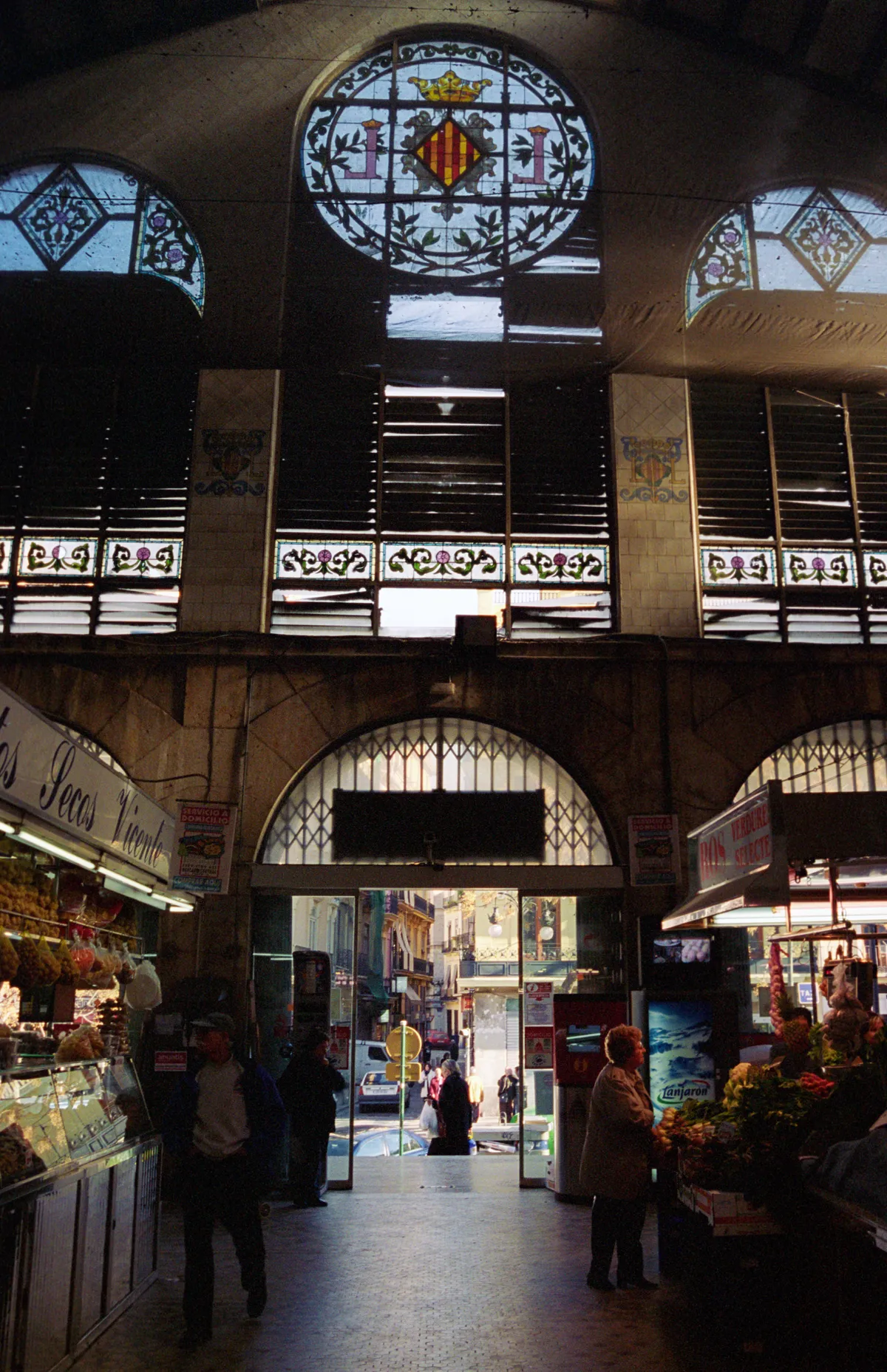
My hostel was hidden away in the alley behind the old mercantile hall, La Lonja, just a few moments’ walk from the market. When I first saw the Mercat from the opposite end of the Calle Ercilla passage, I took it for a railway station. Finished in 1928 and covering roughly 8,000 square metres, the building has the appearance of a grand transportation terminus. Around the outside, faded green awnings stretch out over kiosks with signs such as:
“Gelat - Chocolateria - Heladeria Artesana”
“Paelleros de Gas”
“Comidas Para Lleve - Pizza”
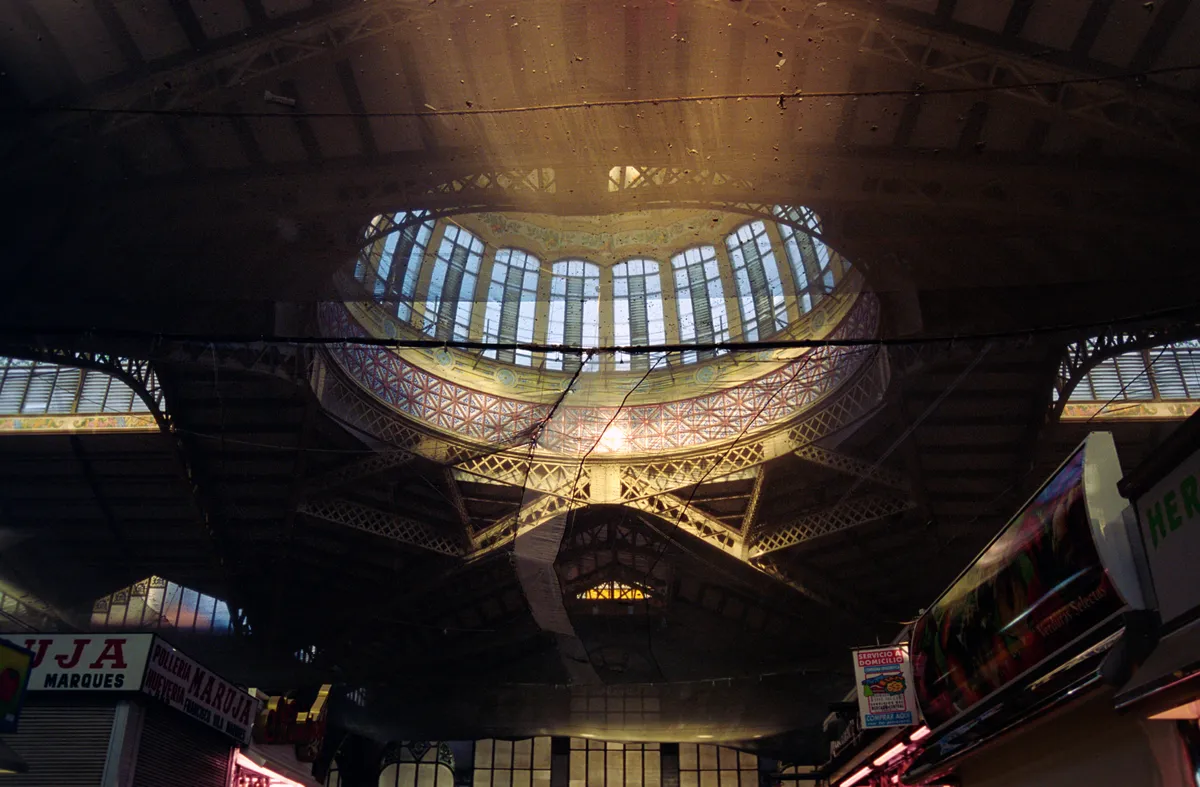
Inside, the Mercat Central resembles a vast cathedral of commerce and nourishment. I have never seen such an abundance of fresh, vivid goods in a single location. At the edges of the market, merchants sell a complete complement of household items and the odd scarf or pair of knickers.
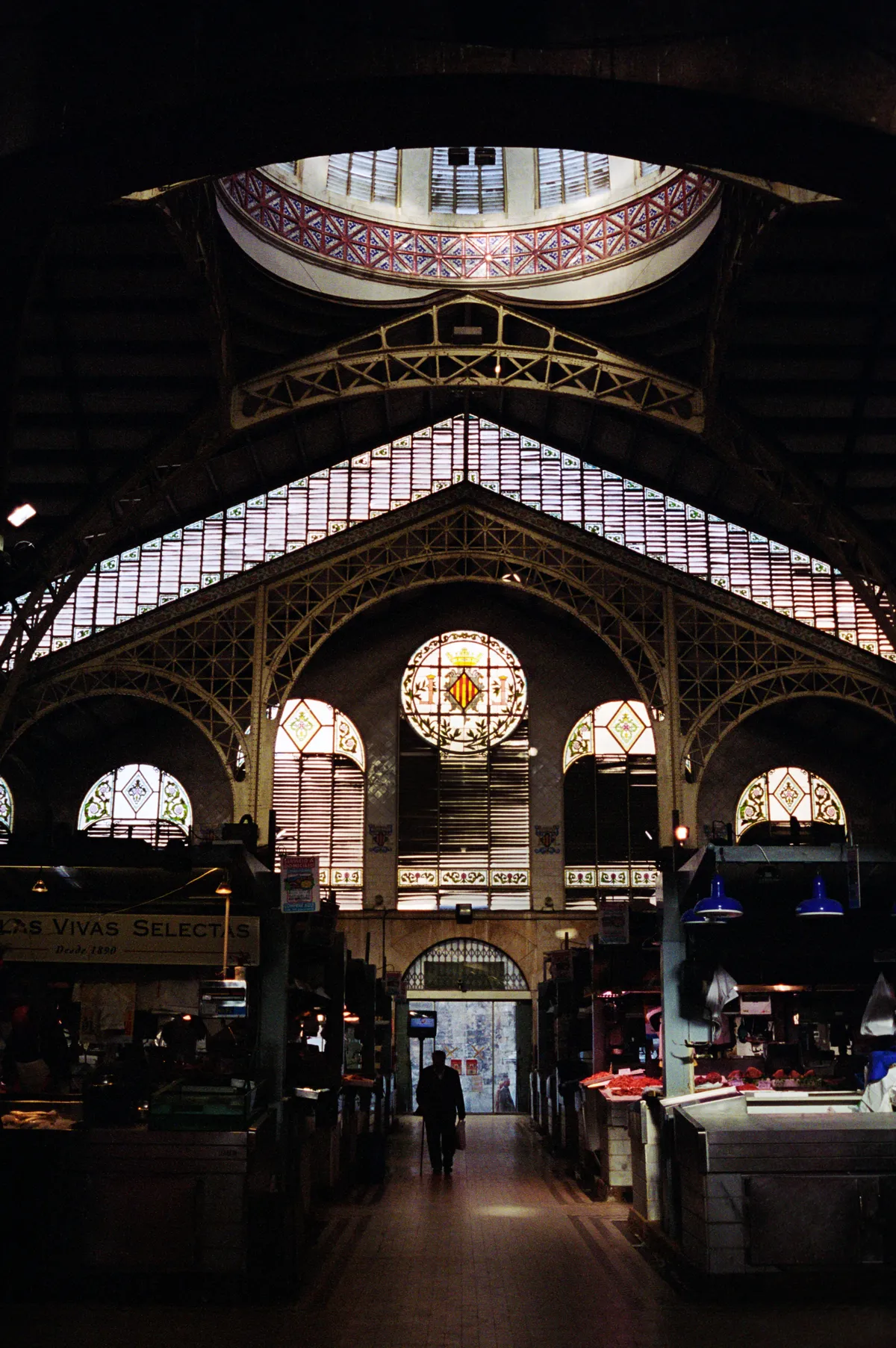
Hundreds — perhaps a thousand or more — of brightly lit stalls run along “avenues” that cover the length of the building. As I scribble this note against a broken brick wall outside, I can’t quite find the adjectives to describe the heaps — the disgorged masses of fruit and vegetables. Peppers and tomatoes in shades of scarlet, green and orange, streaked with darkly coloured patches, are pieces of irregular art. (These proved extremely sweet when roasted, which I did in the evenings at the hostel.) Piles of beans with bulging pods like swollen garden snakes, leafy greens far too wild for their crates, artichokes, cauliflower.
And the oranges. Every stall displays vast pools of oranges heaped ten high and twenty wide. As with the veg, each orange bears scars and imperfections that tell of an existence outside a controlled zone of cultivation. I desperately want to taste those fruits. But there is more to experience.
Freshly butchered meats and filleted fish feature prominently in stalls around the perimeter and in a specially cooled section of the market. Pork and beef are all healthy shades of pink with marbled streaks, and the pescados look fresh from the fishmonger’s blade. I would recognise the same merchants from Saturday on the following Monday and Tuesday, fronting their goods and gossiping with the same brisk friendliness that belies a life of hard farm work.
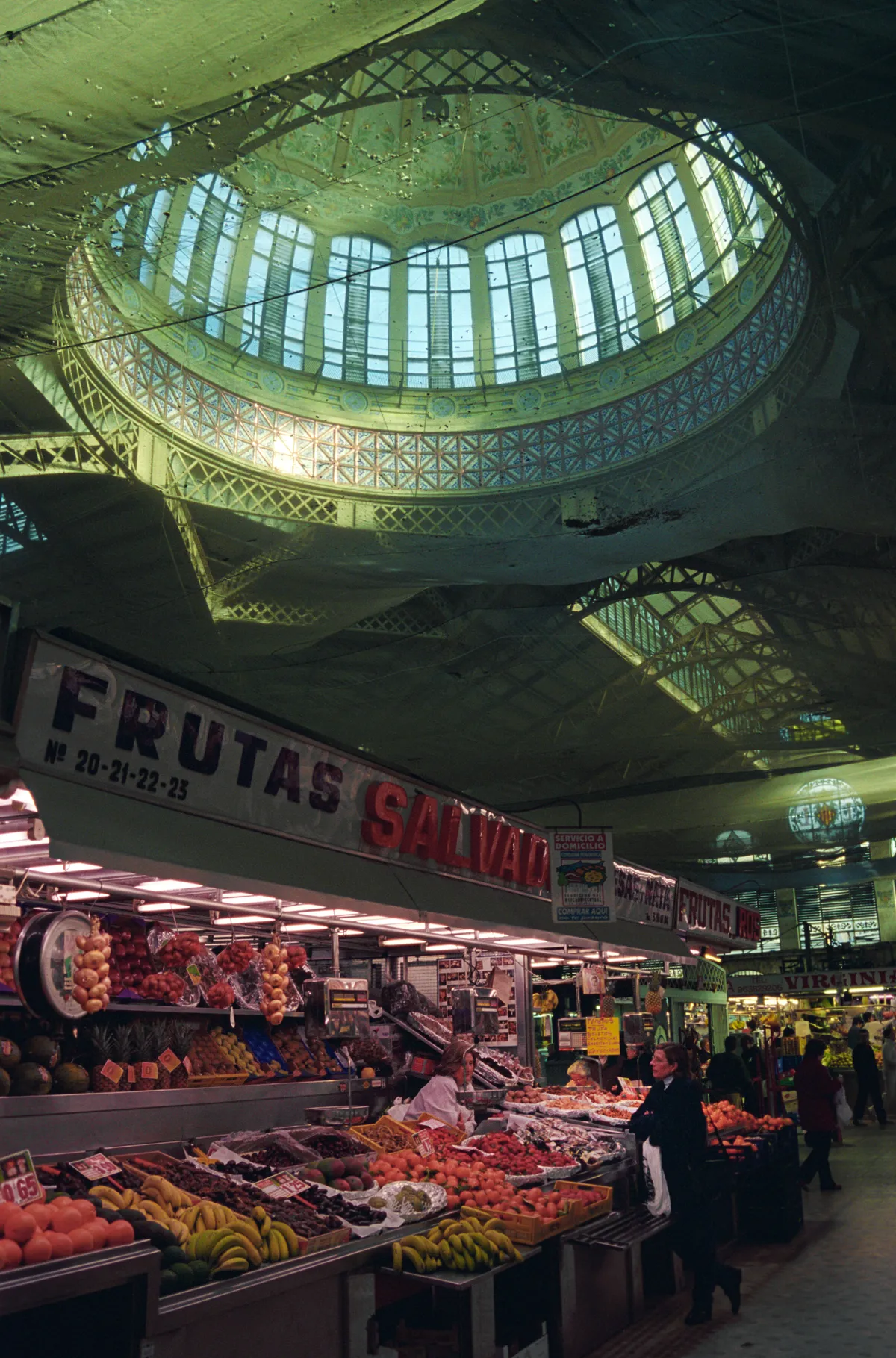
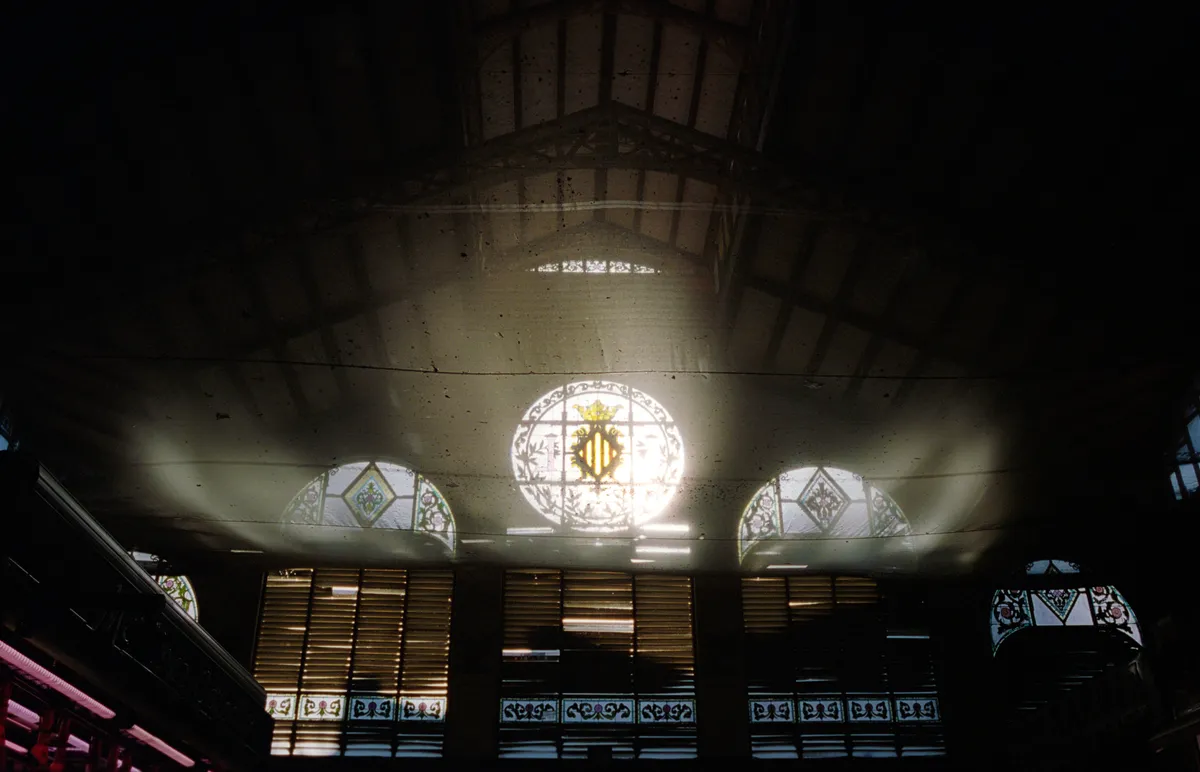
Far above, swathes of muslin-like fabric hang from the ceiling. While the fabric prevents bits of masonry from crumbling off into the crowds, it also transmutes the light. Rays become diffuse sparkles and coat the air above the stalls with sunshine. This mystical ether connects the nourishment of the body to the aspirations of the soul. Earthly transactions leading to earthly pleasures go on here, and I am about to take part.
Outside the market, at my favourite greasy spoon, I sit a little while and peel an orange. Using the length of my tongue, I crush each slice against my teeth. With the faintest pressure the skin ruptures and sweet juice flows. Bits of pulp swirl about my mouth and I let the flavour linger. Then I start on another slice, watch the people of Valencia, and write.
On the Sunday morning of my stay, I visited the James Turrell installation at the Institut Valencià d’Art Modern (IVAM). After half an hour in the queue (who knew art lovers flocked to the museum on a Sunday morning!), I was admitted into the darkened hallway leading to the first room. Turrell is a Californian artist who uses light to create “sculptures” and invites the viewer to cross the boundary between object and observer — a perfect experience for this reporter.
A bloody light oozed from a recess to the left. A corridor lit like the interior of a flame led me to an oval room. My immersion in the ruddy light was total and disorienting. Where were the walls? Where were the boundaries, when space seemed to oscillate in shades of scarlet? Fellow gallery-goers appeared out of a wispy black line that broke the otherwise pervasive colouring and hinted at the exit beyond.
I stepped into enveloping darkness and groped my way towards the next glow of white light some distance away. The attendant muttered a phrase in Spanish and nudged my shoulder in the proper direction. I could not discern objects, or the volume of space between me and the walls. To quote an old poet: “darkness there, and nothing more”. At least I thought there was nothing. As my eyes frantically gathered what light they could, I saw three grey, oblong shapes that pulsed with a greenish tinge. This moment in my life warped like whale-song underwater. Being blind must feel like this, I thought.
In the next room, a series of concentric orange triangles beckoned the viewer to step forward and breach the space. I walked across the virtual line of demarcation into a modernist painting in three dimensions. The juxtaposition of real and unreal shapes incorporated my form into the work as yet another brushstroke in the artist’s imagination.
Taking a break from sightseeing, I visited the Valor Chocolatería at the opposite end of the Plaza de la Reina. While the chocolate and baguette spiked my energy levels, I didn’t rate the too-sweet taste very highly after my morning’s experience of churros y chocolate. I had stopped at some forgotten stand near the Mercat Central and immediately taken to the fried bread con mug of steaming, gooey liquid chocolate (followed, of course, by a coffee). Properly fuelled, I was very much in the mood for a hike up the towering barbican known as the Torres de Serranos.
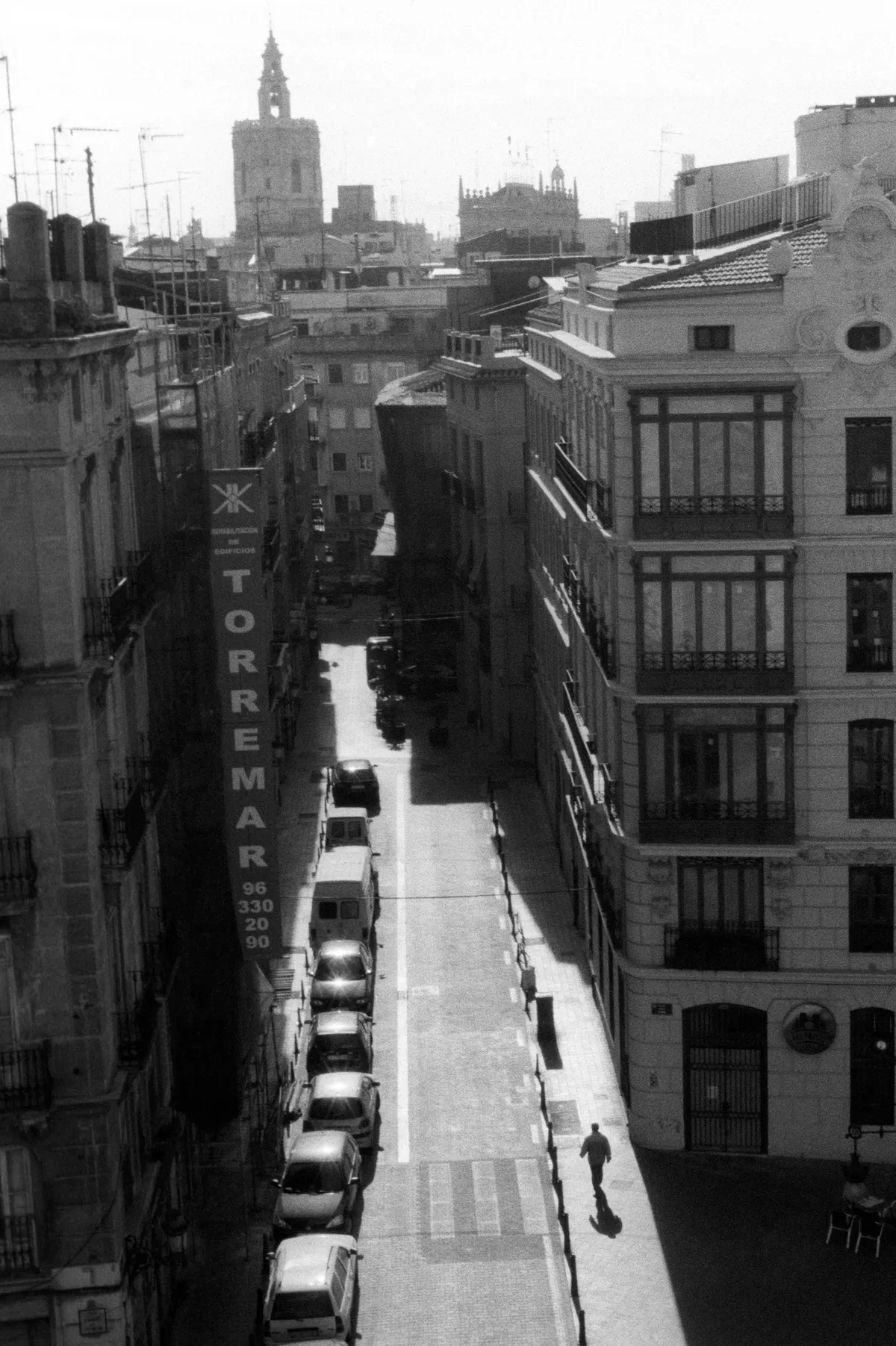
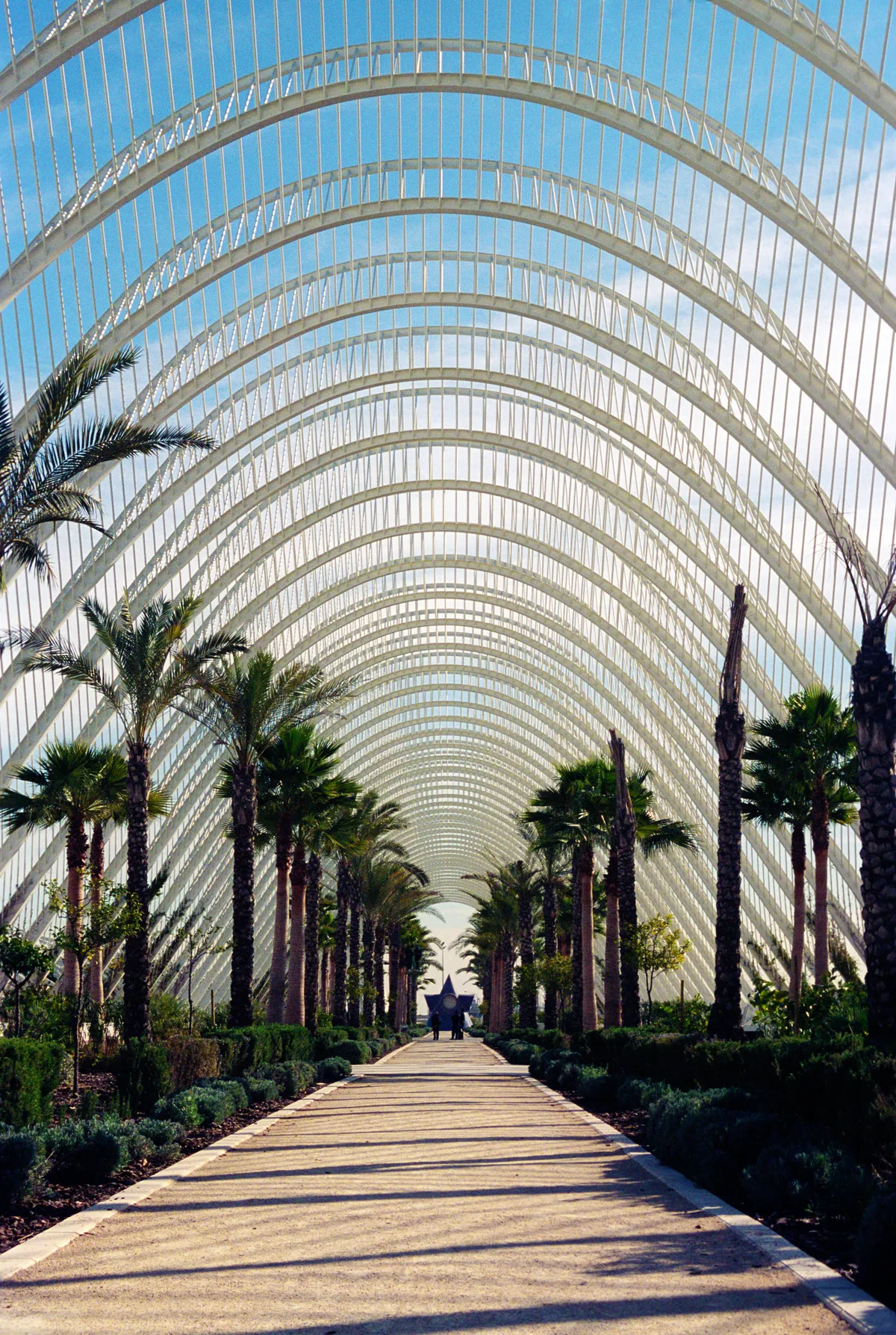
My strolls through Valencia were always accompanied by the sight of orange trees — crisp patches of green with the fruit distinctly visible in every plaza. Although few park-like spaces exist within the old city plan, a vast stretch of dried riverbed has been remade as a coil of green. The Turia Gardens extend from the docks all the way through to the north of town.
The eclectic collection of buildings — basilica, bell tower, chapel (with the ‘Holy Grail’ no less) and cathedral — that forms the centre of religious life in Valencia rests between two broad plazas where people gather throughout the day and late into the night.
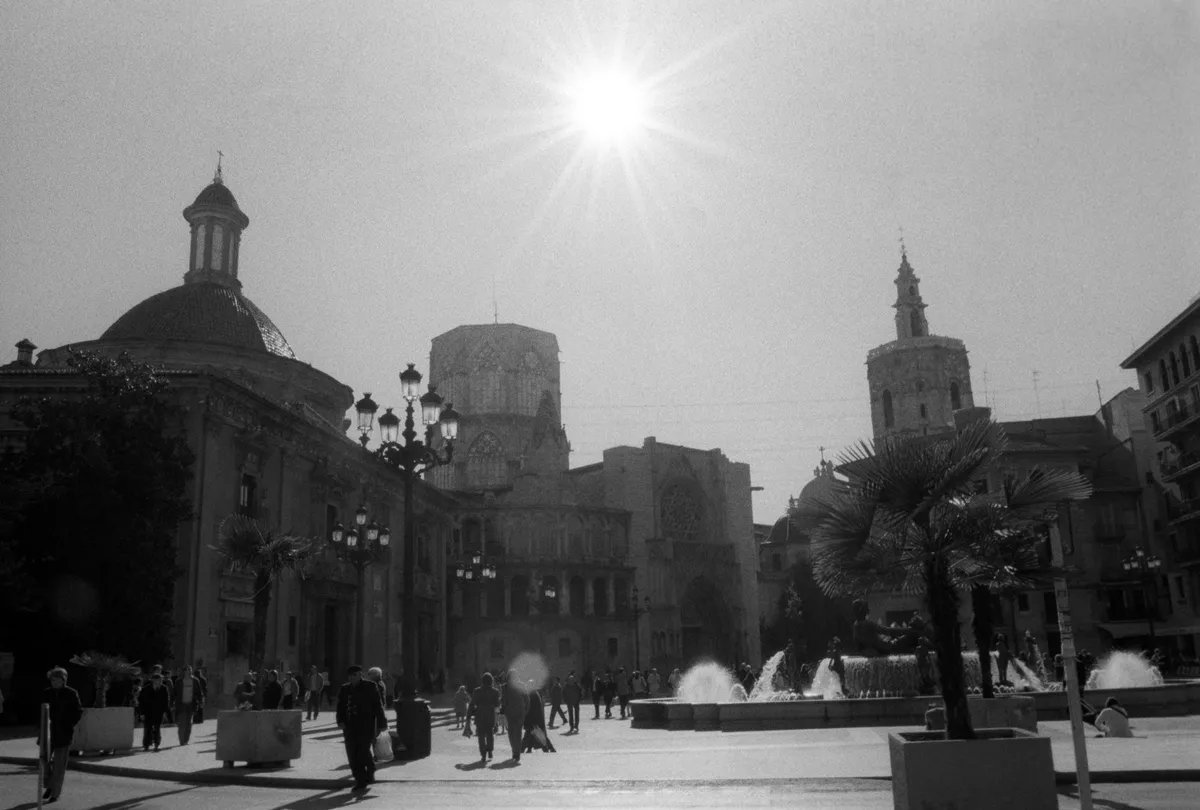
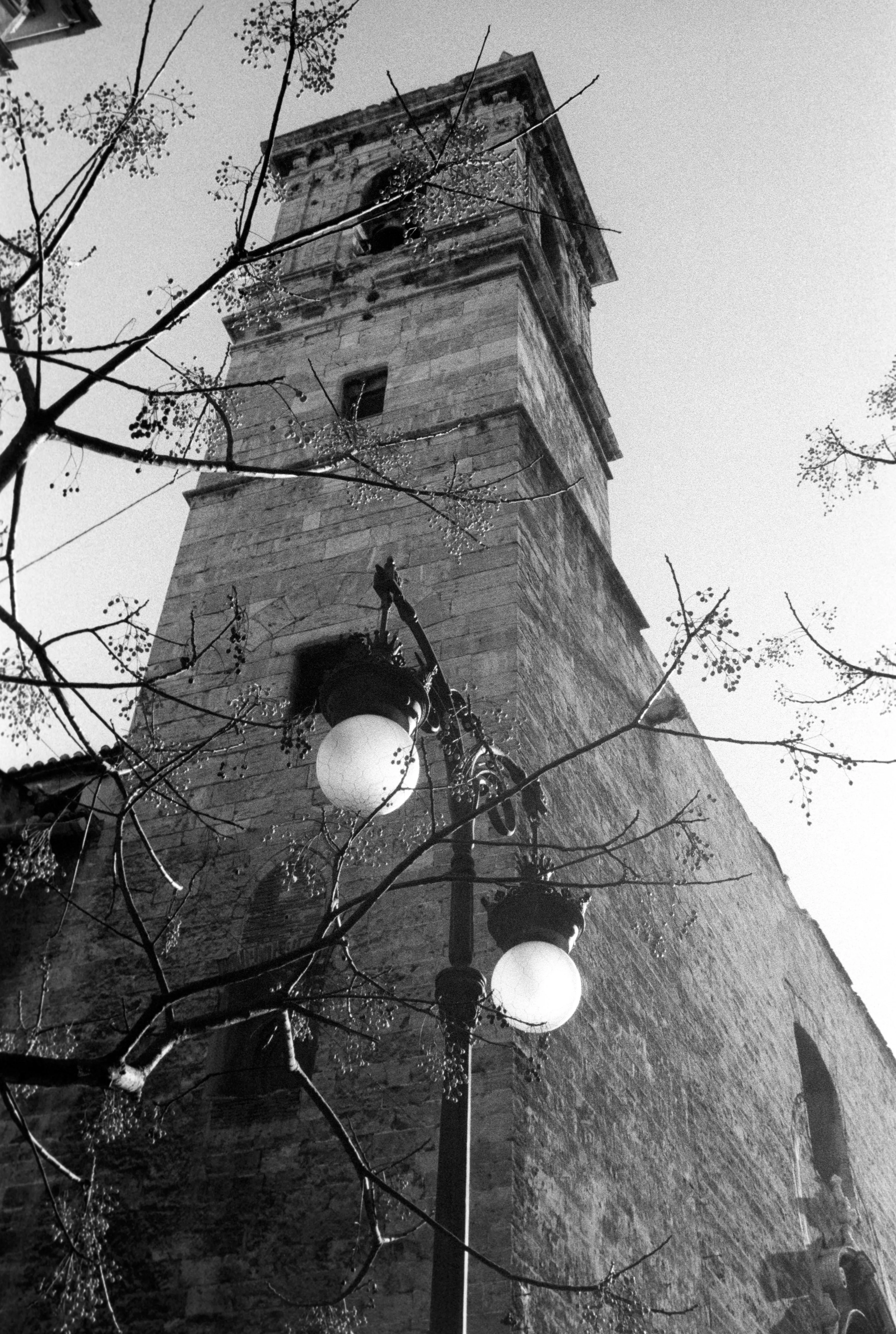
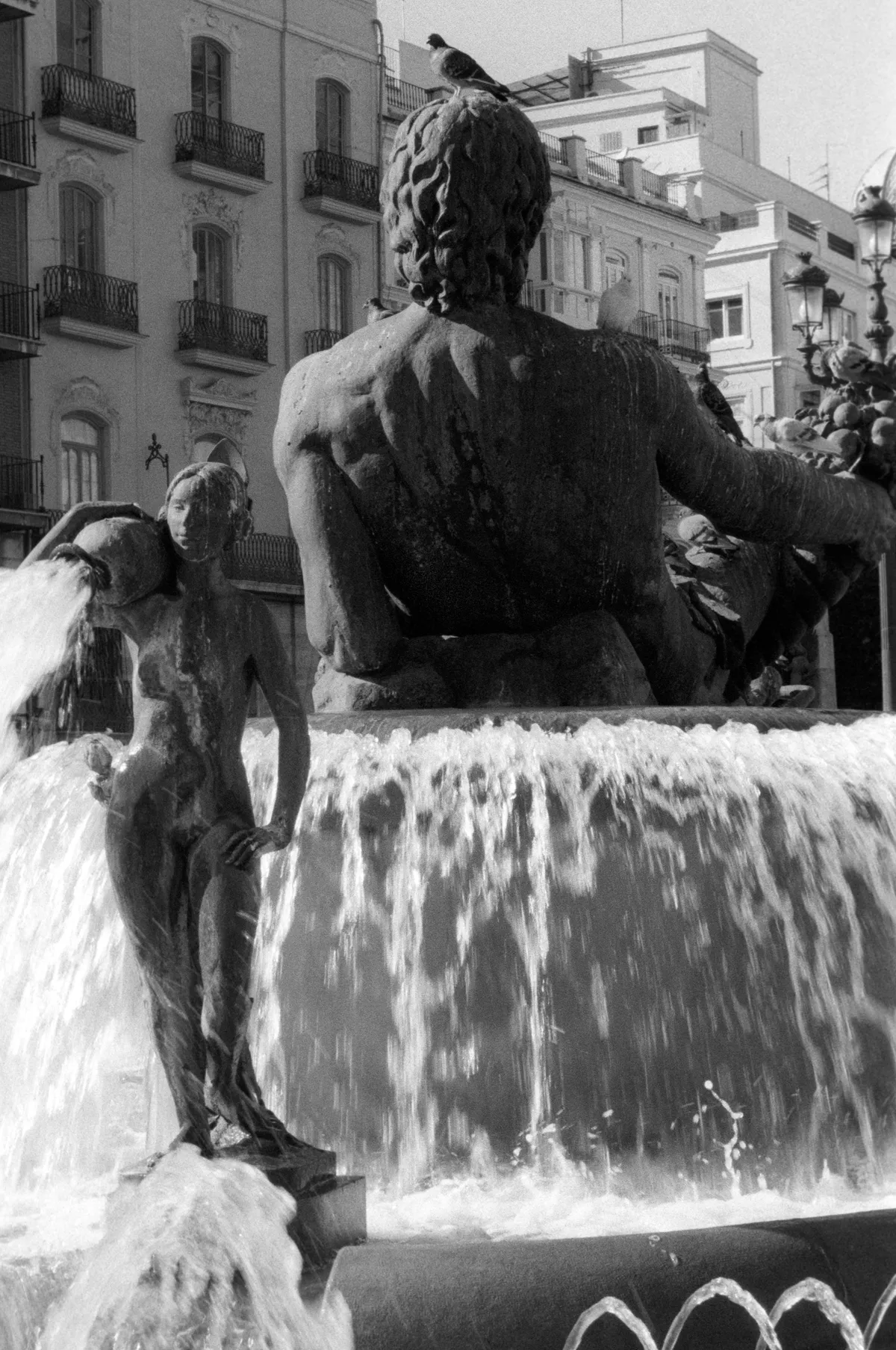
I started from the great pigeon-covered statuary fountain in the Plaza de la Virgen. Not to lose track of the tour, but is it possible not to take a photograph of a statue with a pigeon on top? Never mind. Pausing to reload my 35mm camera, I wandered along the shaded side of the street that skirts the exterior of the Basilica of Nuestra Señora de los Desamparados and empties out into the Plaza de la Reina and the baroque entrance to the cathedral.
Inside, with my flesh prickly from the sun, I took some time to adjust to the dim lighting. Clean, spare lines marked the edges of the empty space between floor and ceiling. Massive sandy-coloured columns led my eye straight up to panels of marbled beige stained glass. I walked around the resonance chamber of the pipe organ and had the urge to climb through the holes in those tubes just to immerse myself in the sound (and, I would think, burst my eardrums — so much for the romantic gesture). Although I wouldn’t describe the Gothic ambience as charming, some warm lights from the altars around the perimeter of the cathedral softened the mood. Later that afternoon I spent an hour listening to Mass in Spanish … not understanding, per se … but just washing myself with the sounds of the language and the enveloping tones of the organ.
Why is it that the Spaniards of Valencia look all tucked-up and cosy in their clothes? They manage to pull off that comfy-chic quite nicely. Something about their sense of dress tugs at my tactile nature, and I want to know why. Perhaps it’s texture over tone — the choice of fabric over colour? They don’t always select earth tones to match their complexions. The softness of their colouring is mirrored in the choice of fabric. This visual, and very personal, expression of a local or national character in the mode of dress fascinates me. Compare the clothes of New Yorkers, Londoners, Romans and Valencians: radically different, although they all work with the same basic pieces.
Waiting in the queue at the museum, I take note of the woman in front of me and the patchwork of clothes she wears — jeans, trainers covered with green and blue felt, an aubergine jumper, a pink hooded shirt and an aquamarine hairband. What I have not conveyed in that laundry list of colours is the softness of her dress. These clothes remind me of what I wore as a five-year-old at school. Another woman in the queue wears brown corduroy slacks, a compact ebony vest and a green sweatshirt. Like the rest of the Valencians I see, she is dark-complexioned but freckled, her hair streaked with blonde highlights.
Later, at my favourite café across from the Mercat Central, a luxe-looking man in green tweed picks a bit of ash from his blazer. He adjusts his sunglasses and flicks at the long chunks of black hair that grease his lenses. Wearing socks with burgundy and green stripes, this man might fade into the autumn leaves.
Further down, at another table, another man — not a Spaniard — shields himself from the sun with a copy of the Financial Times. White, middle-aged, bald — not shaved, but uncomfortably bald. The man’s lack of hair neither highlights a pair of piercing eyes nor shifts focus to a cheeky smile. He looks miserable, hiding from the warm light behind a newspaper as pink as his flesh.
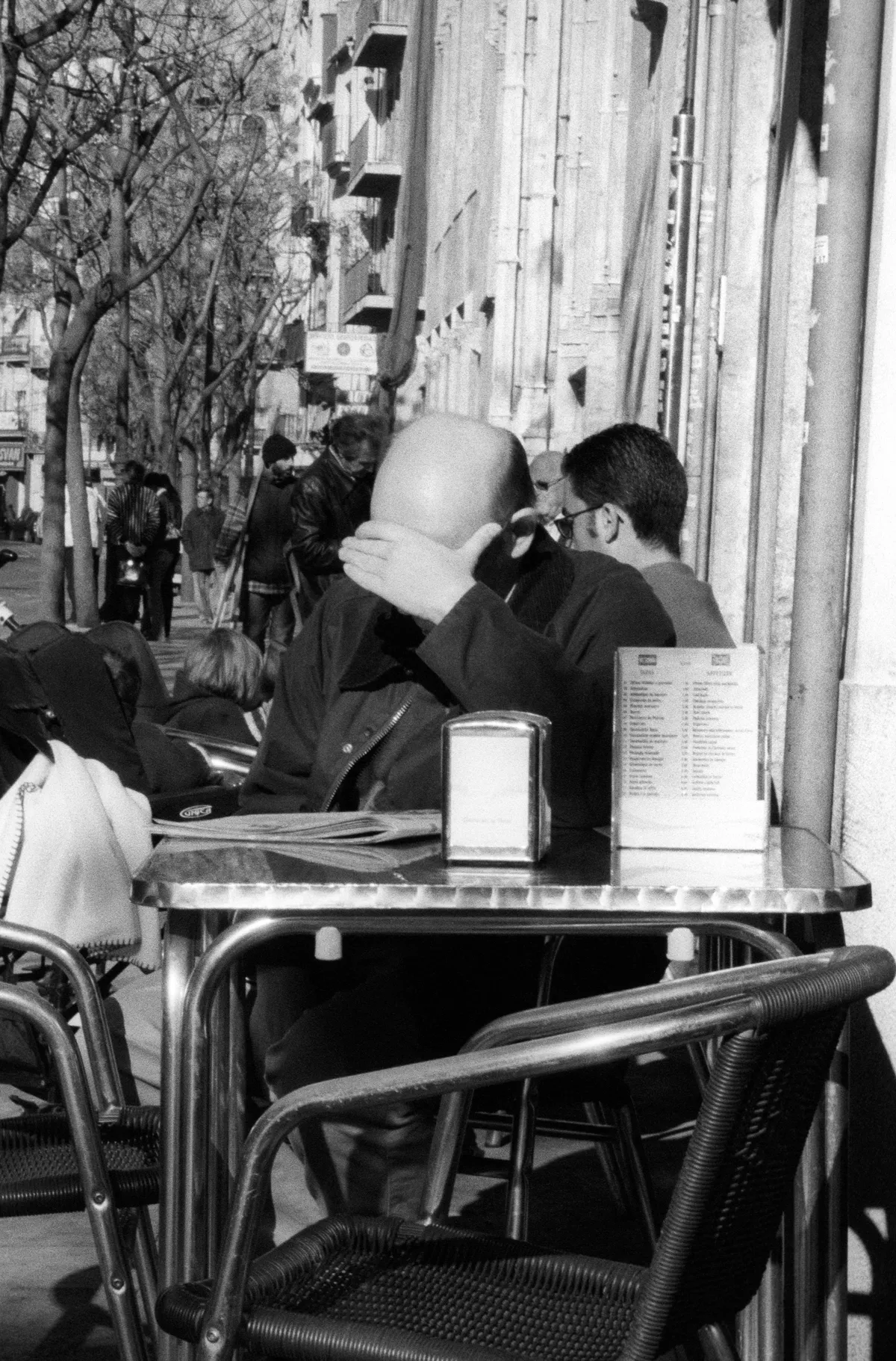
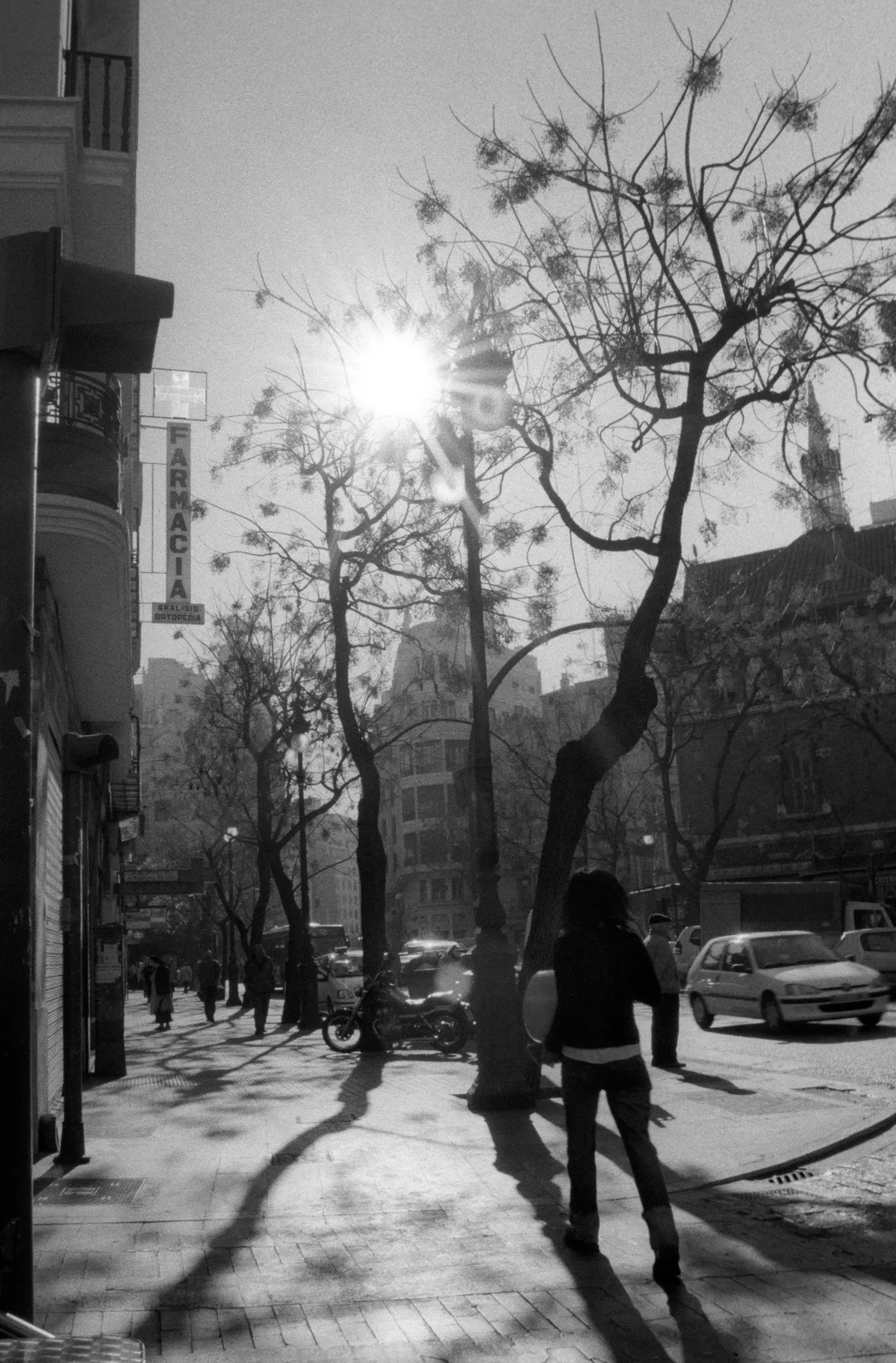
After my café con leche, I wander through the many broad plazas. Spinning through a full 360 degrees in the airy Plaza de la Virgen, I snap photo after photo. After exhausting my black-and-white film, I lean against a lamppost and unload my camera. A man in jeans, trainers and a backpack — who seems squeaky clean for a wanderer — traipses up to a nearby lamp and pisses into the drain. Bloody hell! I’m stunned, and can’t manage to reload my camera in time, so this note will have to suffice.