People Don't Die in the Summertime
Athol, Massachusetts · 2010
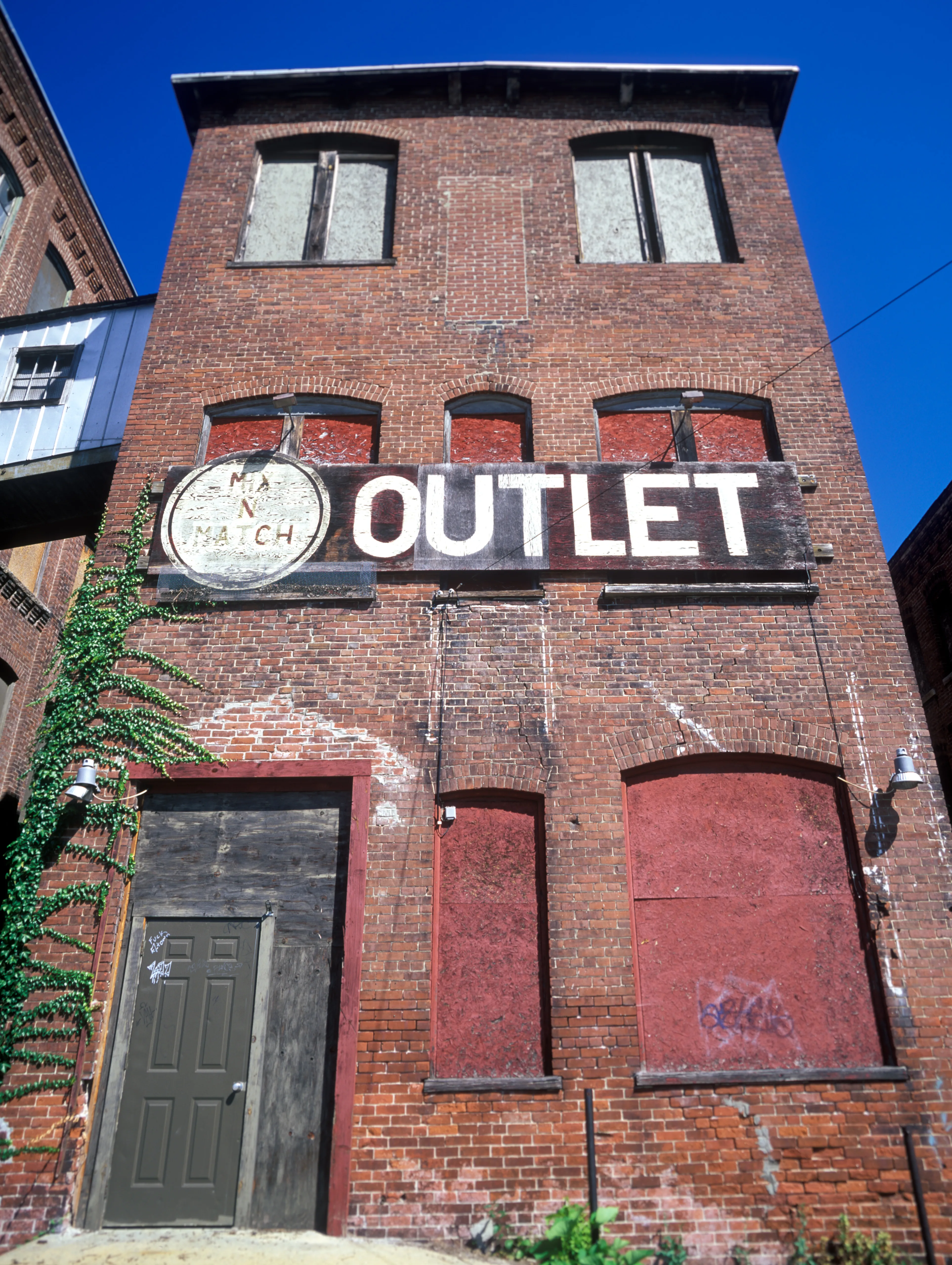
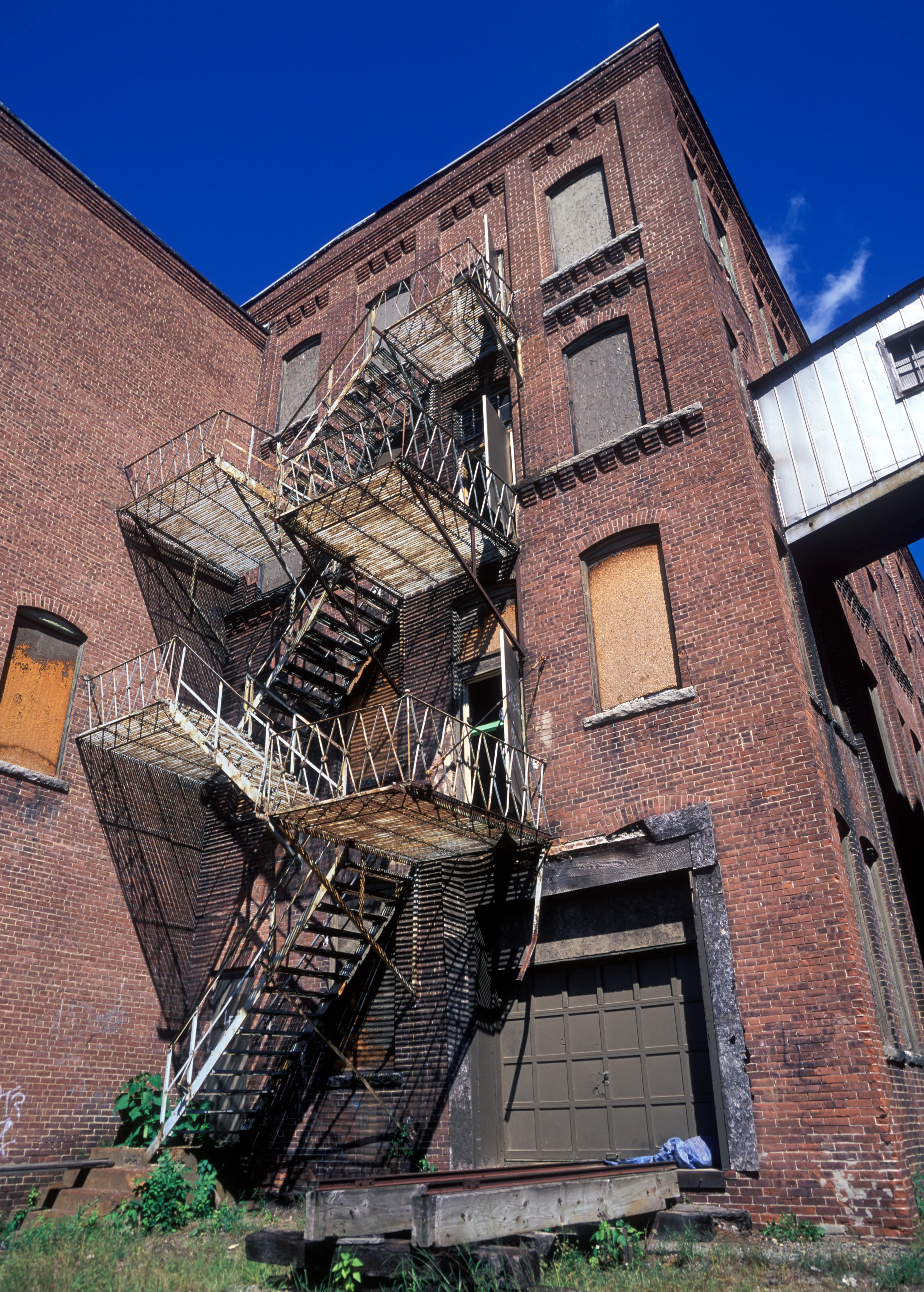
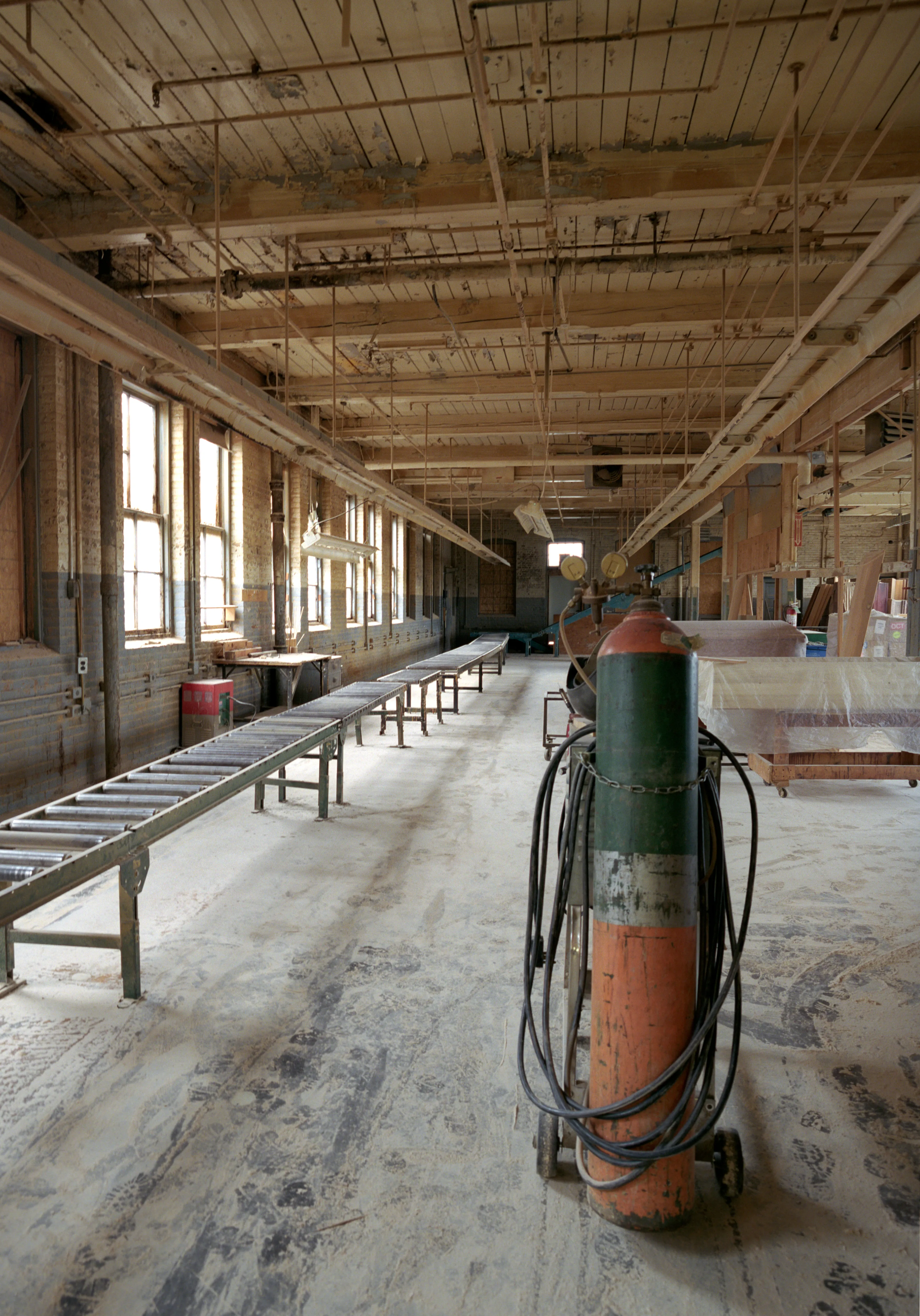
When I first saw the building, I thought it abandoned, like so many other nineteenth-century brick buildings in that part of America. This was Athol, Massachusetts — the same journey that gave me the state of the union. A friendly fellow saw me taking pictures and told me it still functioned as a factory, though the product had changed from shoes to caskets. I rang the owner, arranged to meet and had a very cordial time, indeed.
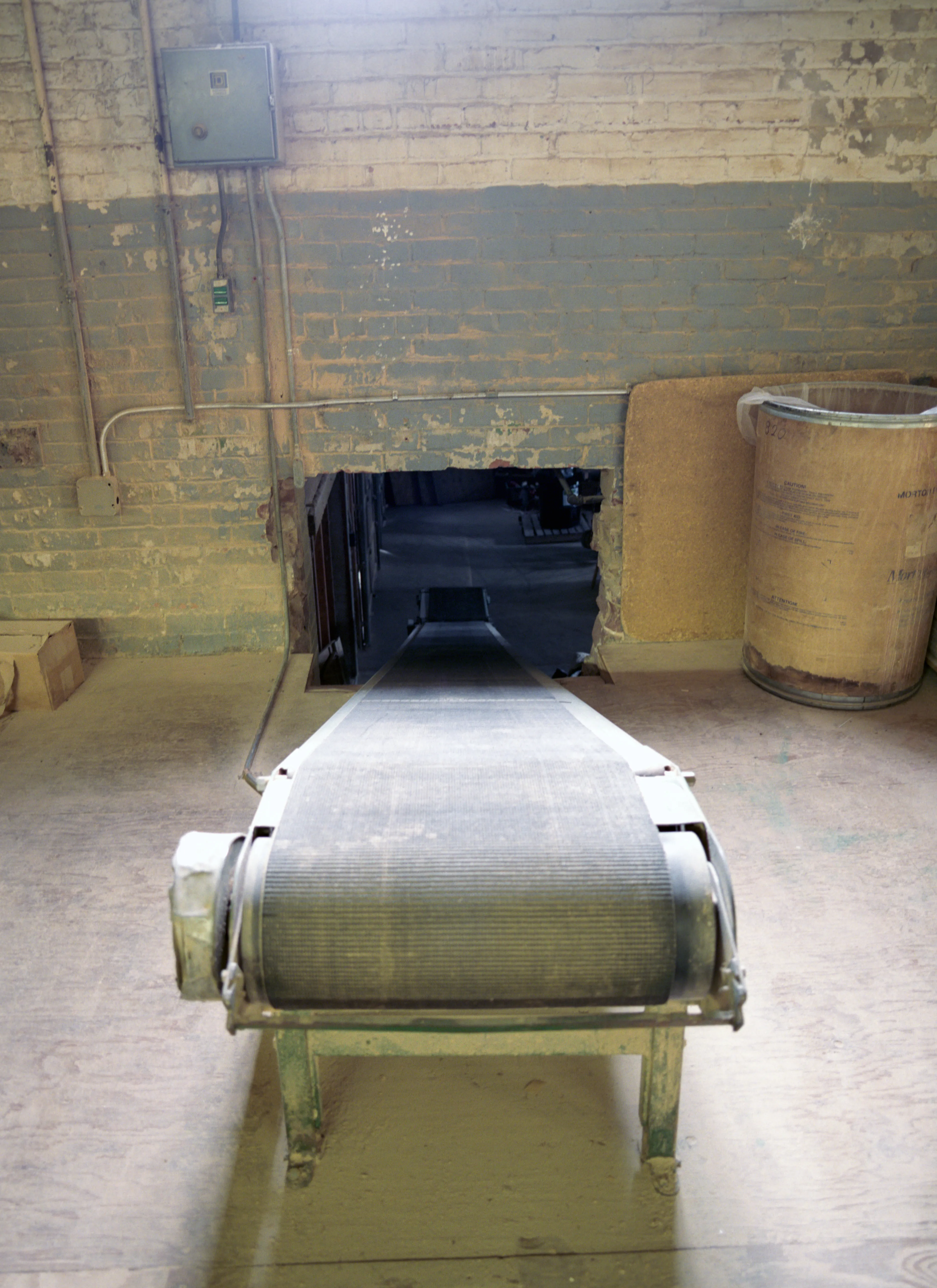
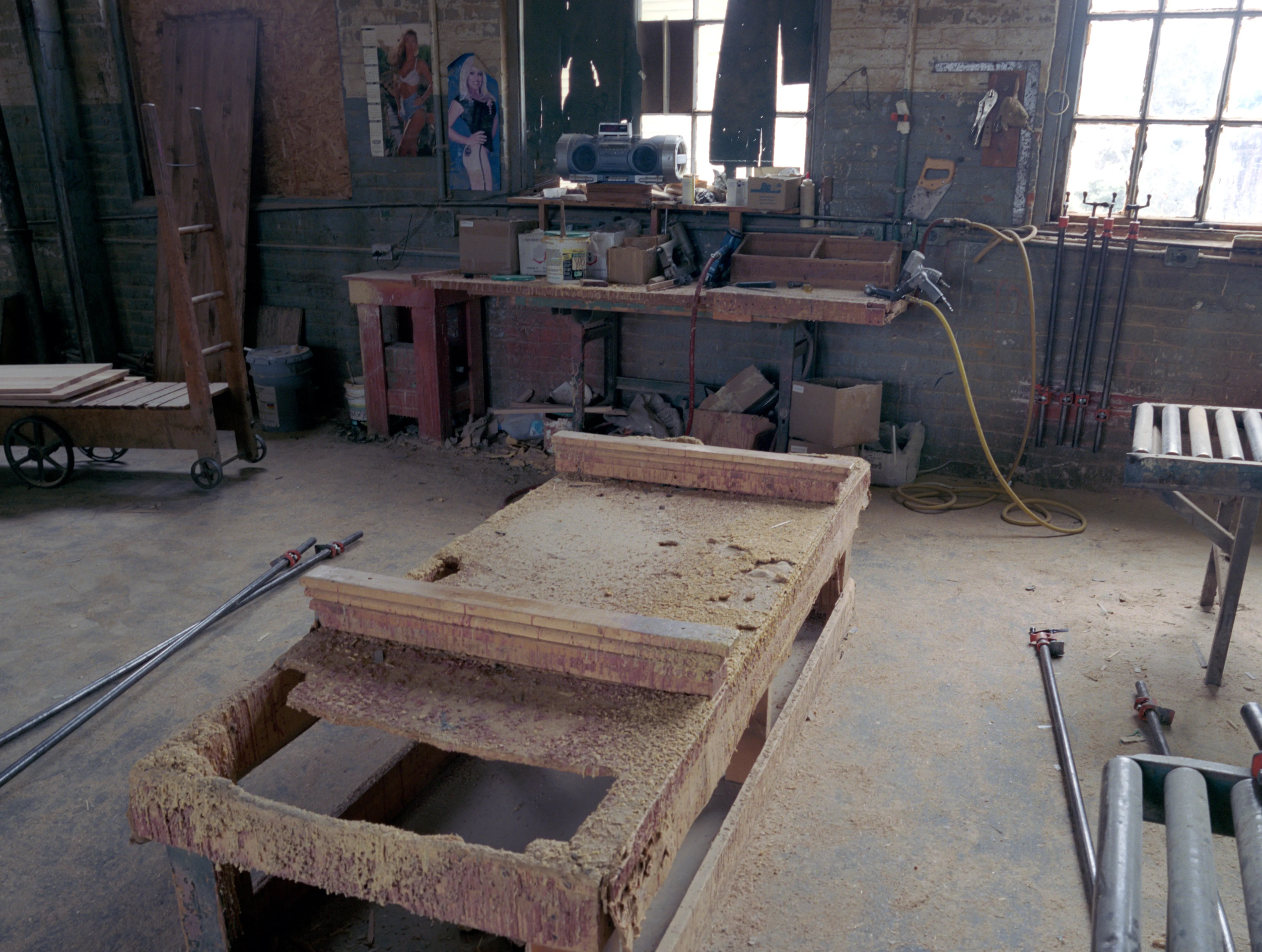
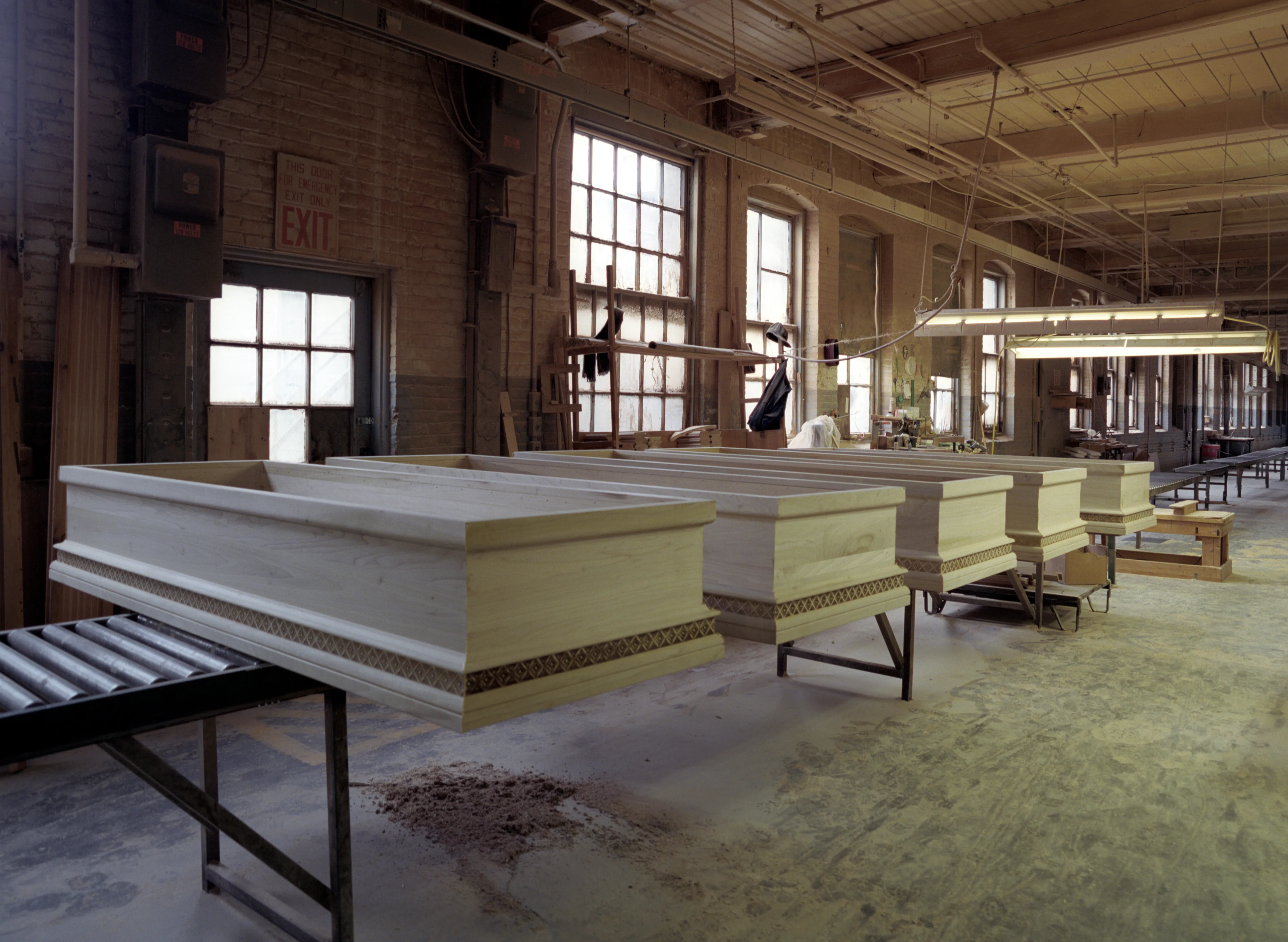
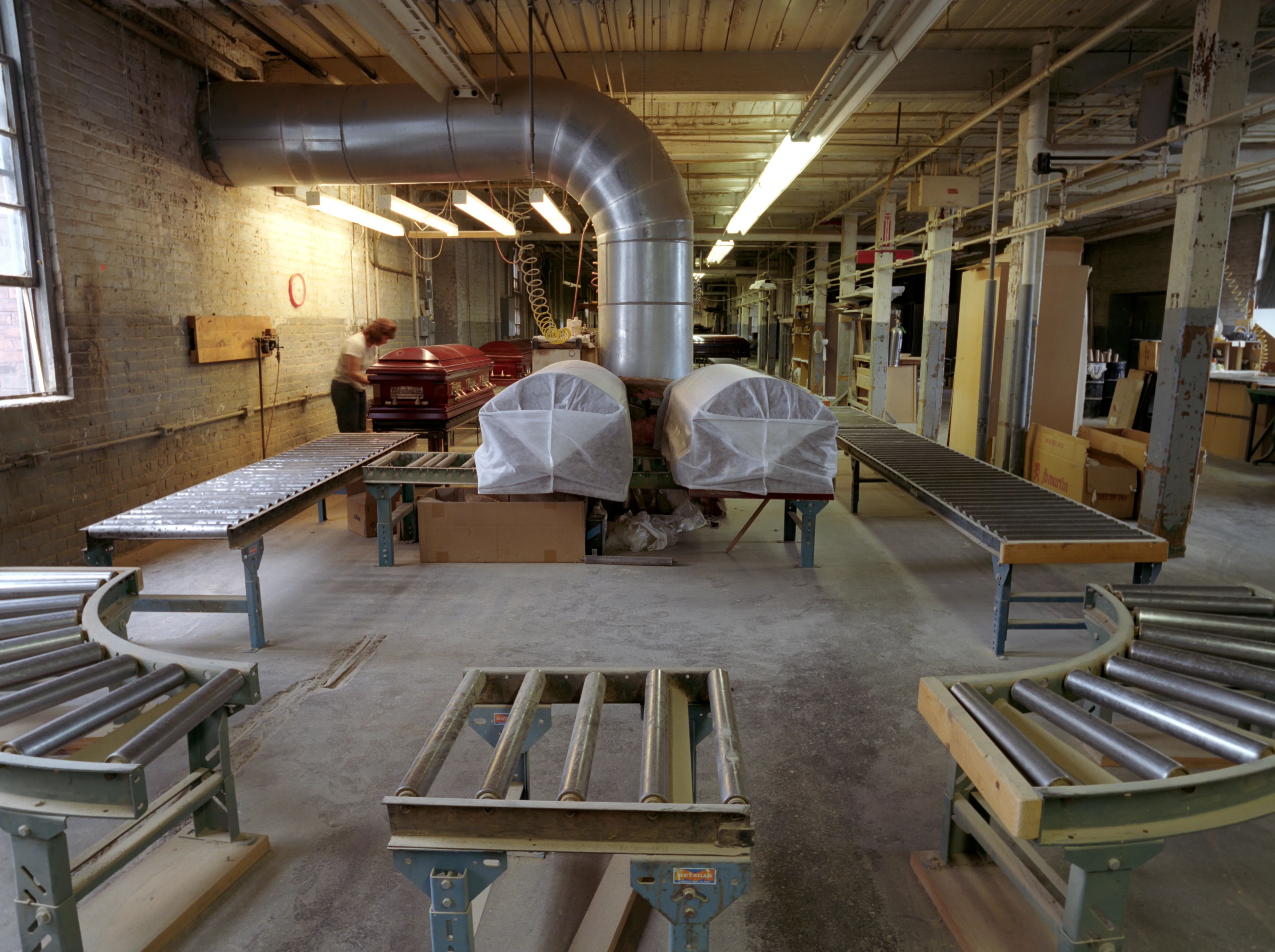
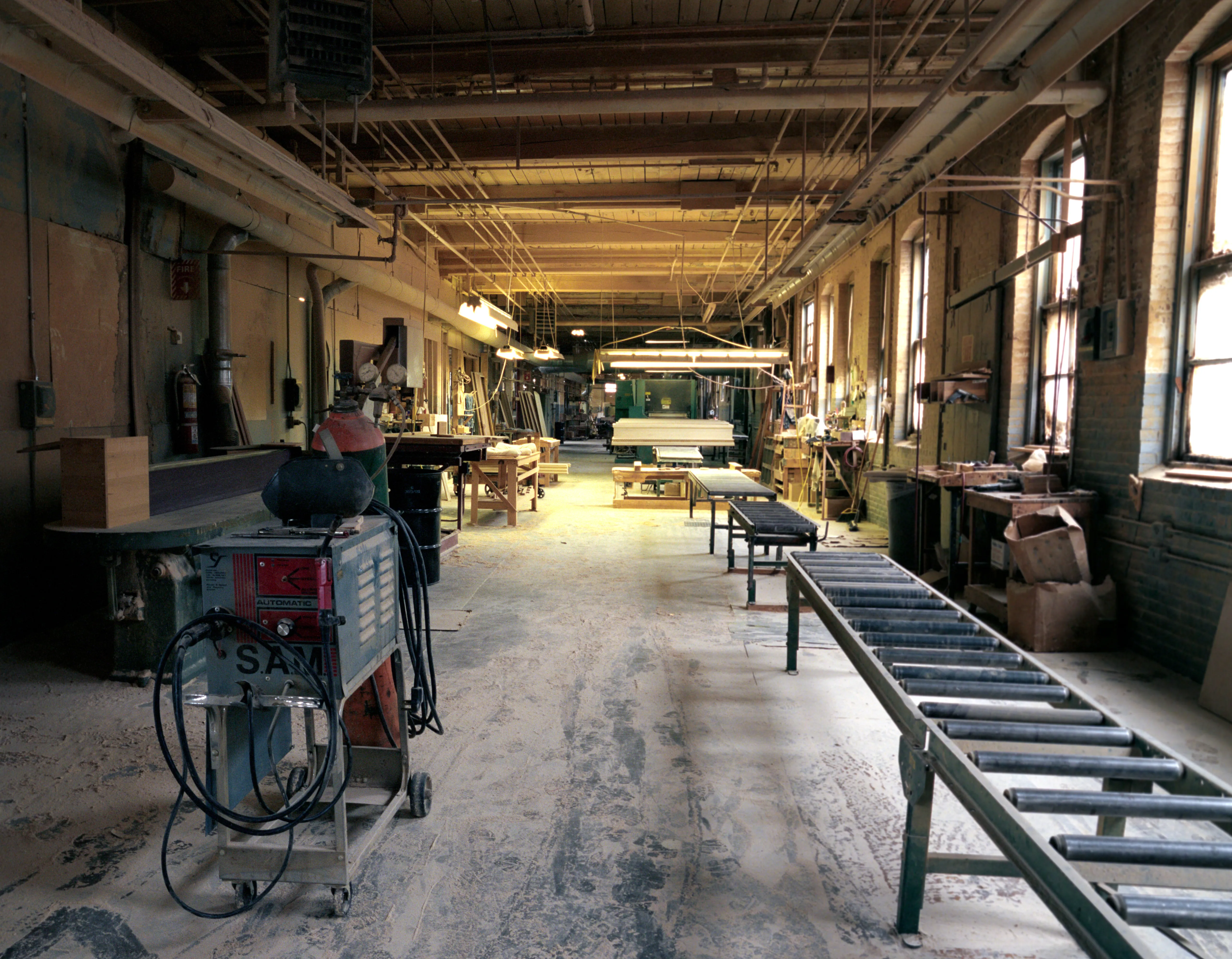
He had drawn on his background as an engineer to custom refit the woodworking machines and create a splendidly logical workflow, which sprawled up through several storeys of the building. His tour led me past the raw planks of wood, along the conveyor belts where they were cut, joined, lacquered and polished, the machines that created the ornamentation, the sewing stations where they stitched the interiors. I marvelled at the precision of it. One doesn't think small firms like this still make anything, certainly not something with such warmth and detail in the final product.
Afterwards we sat and talked. He showed me his telephone first — the new iPhone, his third generation; he had started with the first. He walked me through FaceTime and the little button that turns the camera around, so you could show whoever you were talking to whatever stood in front of you. He was delighted with it. One of the better things they had done, he said. Then I asked how he had got into making caskets.
I started as an engineer, and I was in plastics when I first got out of college in 1970. I worked as an engineer, got to be where I was going to be in engineering, and I dropped out of engineering, thinking about going into consulting. I'd just recently got married, and I had been on the road for two years, and my wife said, "That's enough of that. You're not going to go back to consulting again." She said, "Why don't you just get a real job?"
We were living in Boston. Somebody called me up and said, "You could go over the casket company and straighten that plant out for them" — National Casket. Which I did. I took the job. Then once they got profitable, they sold the plant, and they sent me to the people they sold it to, to start their manufacturing operation there. And I completed my six-month contract, and I said, well, maybe I'll try this myself.
So myself and three other people did a plant in Gardner — Gardner's about twenty miles up the road. We were leasing it for a while, and we eventually bought it just as Jimmy Carter became president, which became a total disaster for us, because interest went to twenty percent just as we bought it. About six months later, I think, the United States went haywire. So after completing that, I went through a bankruptcy. I bought the equipment at auction and came here. That was about twenty-eight years ago.
The people that owned this building approached me. They had bought the building and they didn't know what the hell to do with it. They hired me to come down and look at it, and I told them it would be better for light manufacturing on some floors and woodworking on the lower floors. They said, "Like what you used to do." And I said, "Yeah, I like what I used to do."
They wanted to become partners. So we went to the auction, bought the equipment together, installed it here, and while we were installing it they decided they didn't want to be partners anymore. They just wanted rent. Which left me in a really good position, because they had the building, and now they also had a hundred thousand dollars' worth of equipment. They were worse off than when they started talking to me in the first place.
So I came in and gave my unemployment check to the one remaining person — who's here ever since. And we set the place up and we got it running. I came in here in July, and I shipped my first truckload of caskets in October. Considering we had to take out a shoe factory first to get it in here, and then put the ductwork in and do everything, we did a lot of work. And I borrowed a truck, because I didn't have any money for a truck at that point — borrowed a truck from one of my distributors — and I went out and started selling the product. And from that point on, there's been no turning back.
We had gotten quite a bit bigger, and now we're competing with the damn Chinese. It used to be bad enough when we only competed with the Canadians, because of the dollar. So we're moving away from some of our distributors to selling direct to the funeral homes. Then they actually have a viable choice, whether to buy something from a foreign country or something from an American company — especially when they're selling to Americans.
They're watching the country go downhill, because we're losing our manufacturing base, which is what makes us a strong country in the first place. And we're at worst here, because we only educate people to be, you know, ten percent competent, and then everybody else — good luck. That's the reality of life. I think. I don't know. I'm just watching.
The big one up the other end of town was the union shop — the UTD, the bigger place up the hill, where they made twist drills. We came into town when they were on strike. There was seventeen percent unemployment in town then. It was really quite desolate here when we came. We had a line in front of the building — people looking for employment.
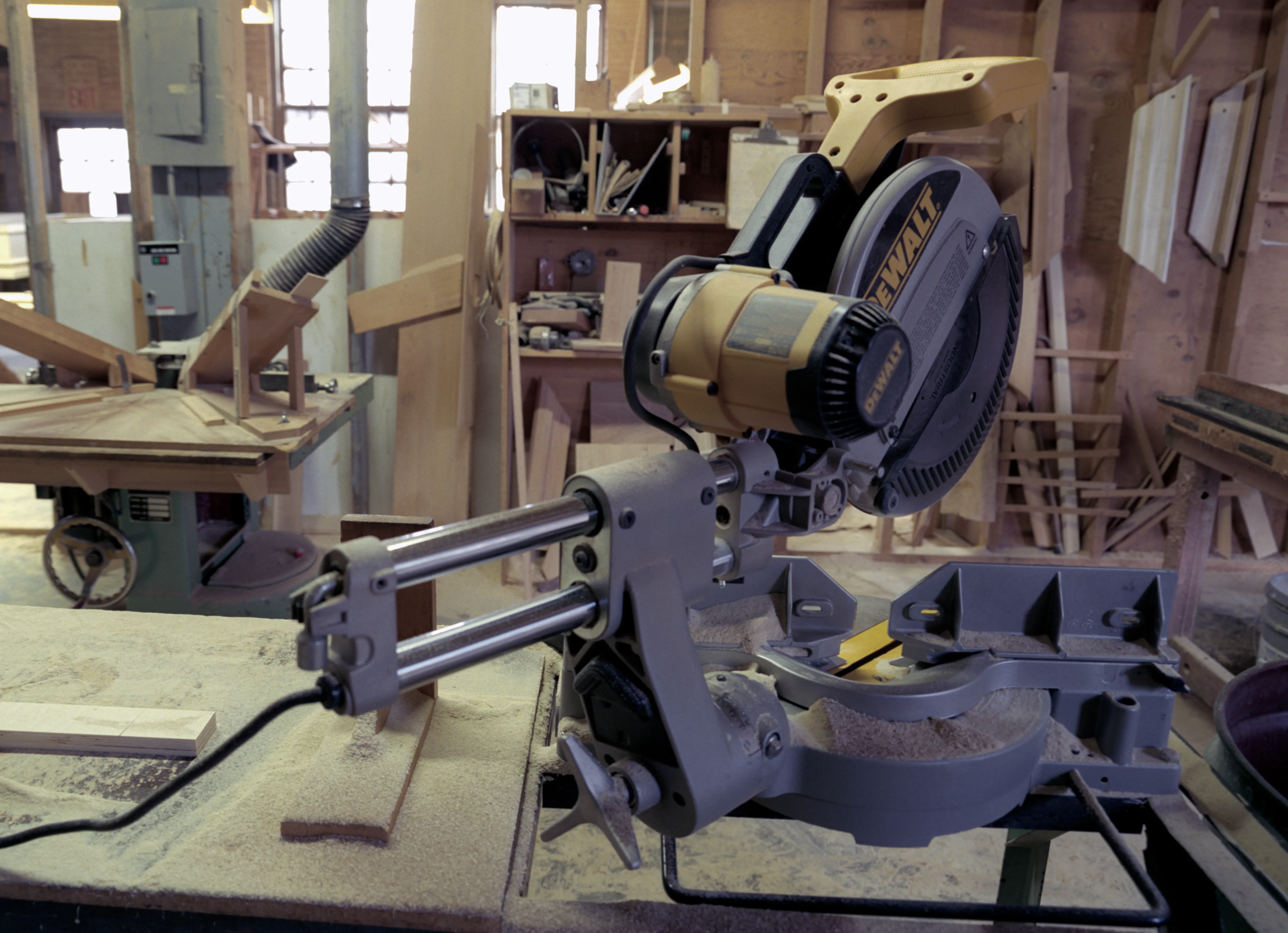
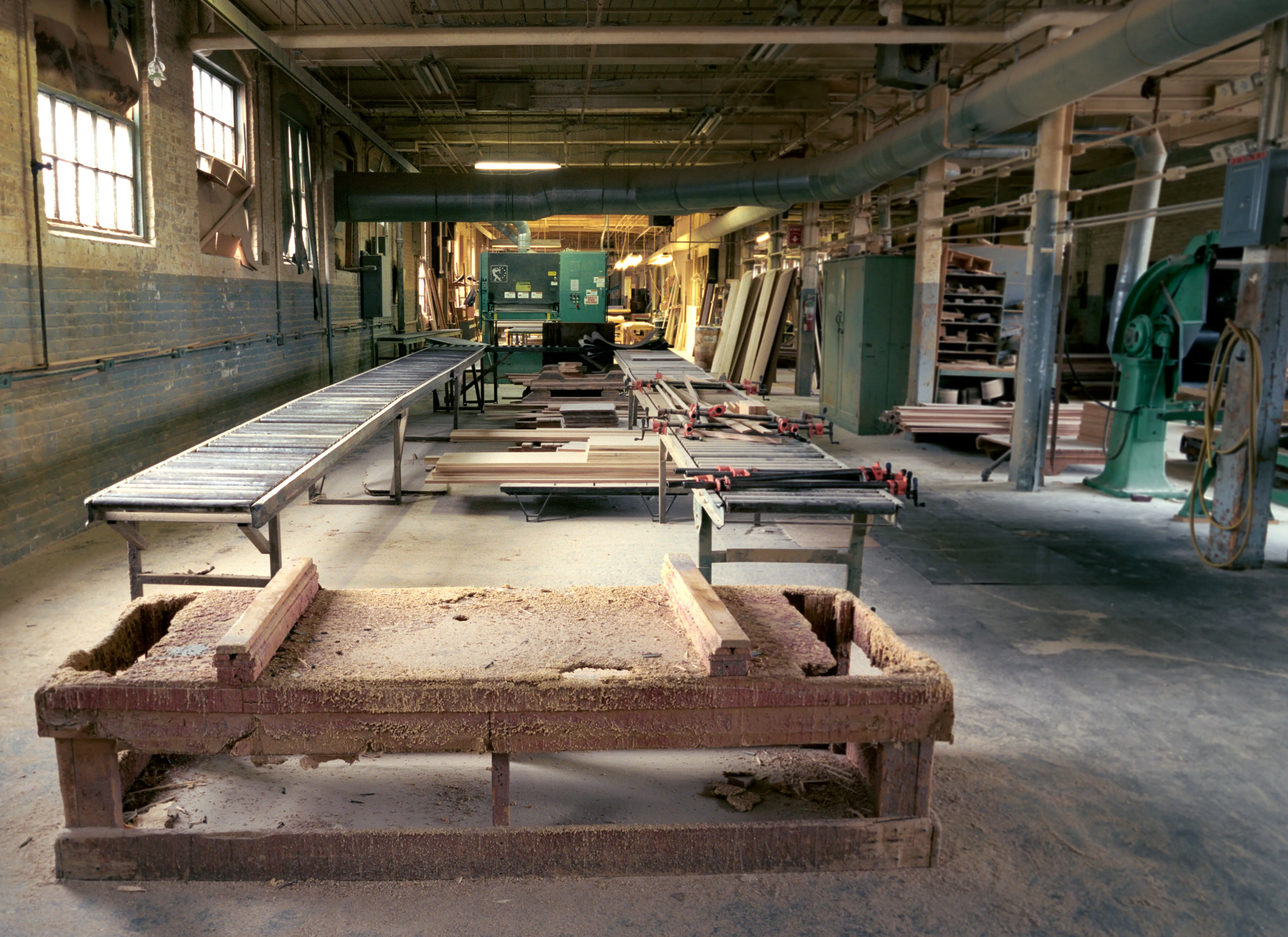
We're at the high end of the business, which is good for us, in that we don't have to make as many. I don't need as many people, and if the economy turns down, I can turn down with it and still maintain a business. The guys that have to make a couple hundred a day — it's a whole different world. Once they lose half their business, they're out of business. We can lose half our business, so I don't make so much money this year, that's all.
It is cyclical, in that people don't die in the summertime. It moves about fifteen percent off in the summertime. You know the old adage: I made it through winter. I made it another winter. Cold and disease and flu and God knows what else. And you don't get the flu in the summer.
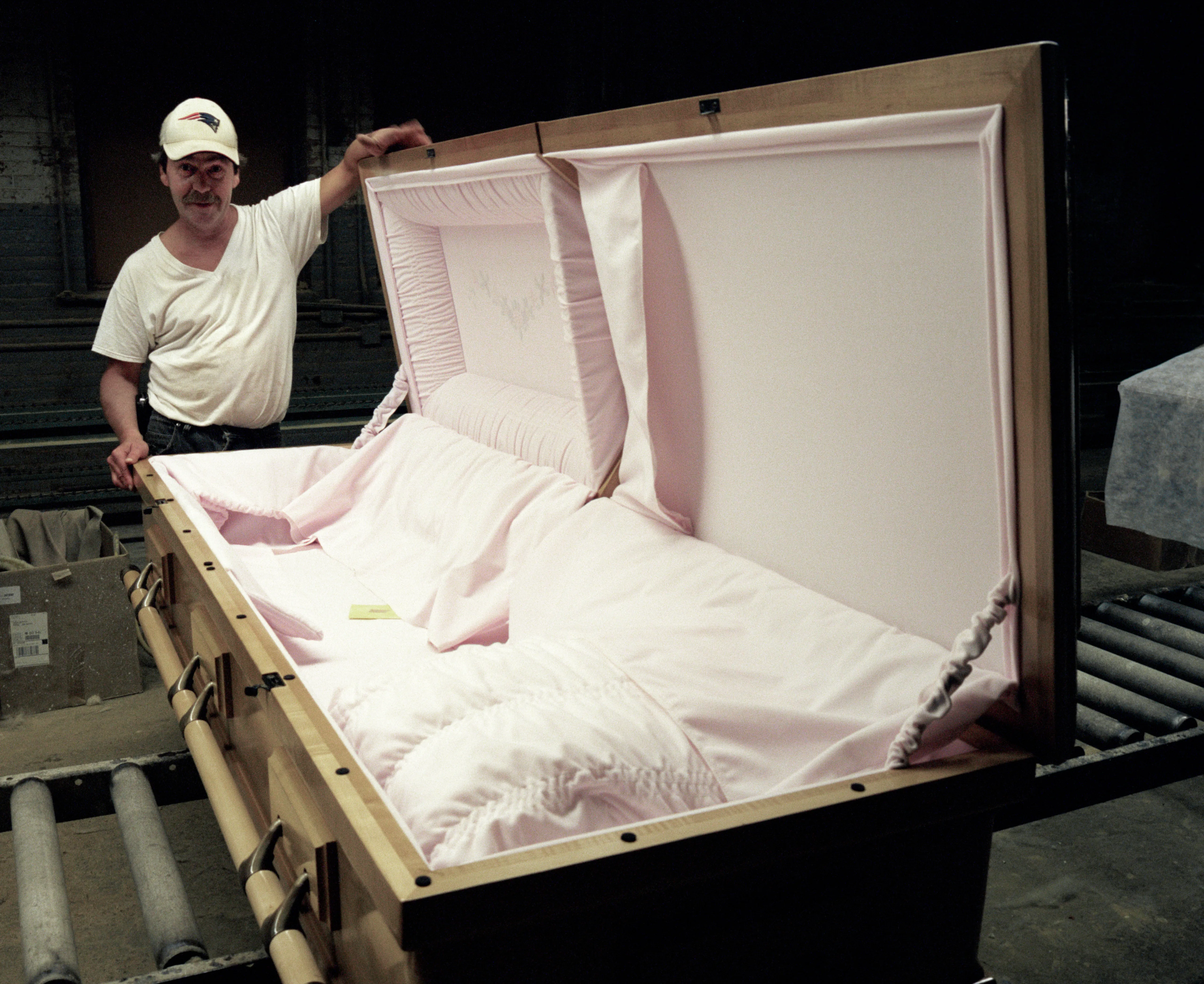
Our average cost is about a thousand dollars. Which is reasonable. There's a hundred board feet of lumber — a hundred and twenty board feet of lumber — in a casket, so you're looking at a chest of drawers. And the joints have to be perfect, and everything we do is hand rubbed. Most of what we do is hand rubbed. So that's quite a bit further processed along than you see in furniture nowadays. And most of what we sell has a velvet interior besides. Add it all up, it's a fair amount of money. We don't make a lot of money on it. The markups on the other end.
I don't know — 2.2, 2.5 times. Well, they bury their costs. It used to be three times. It's gone down.
No, I wouldn't want to do that job.
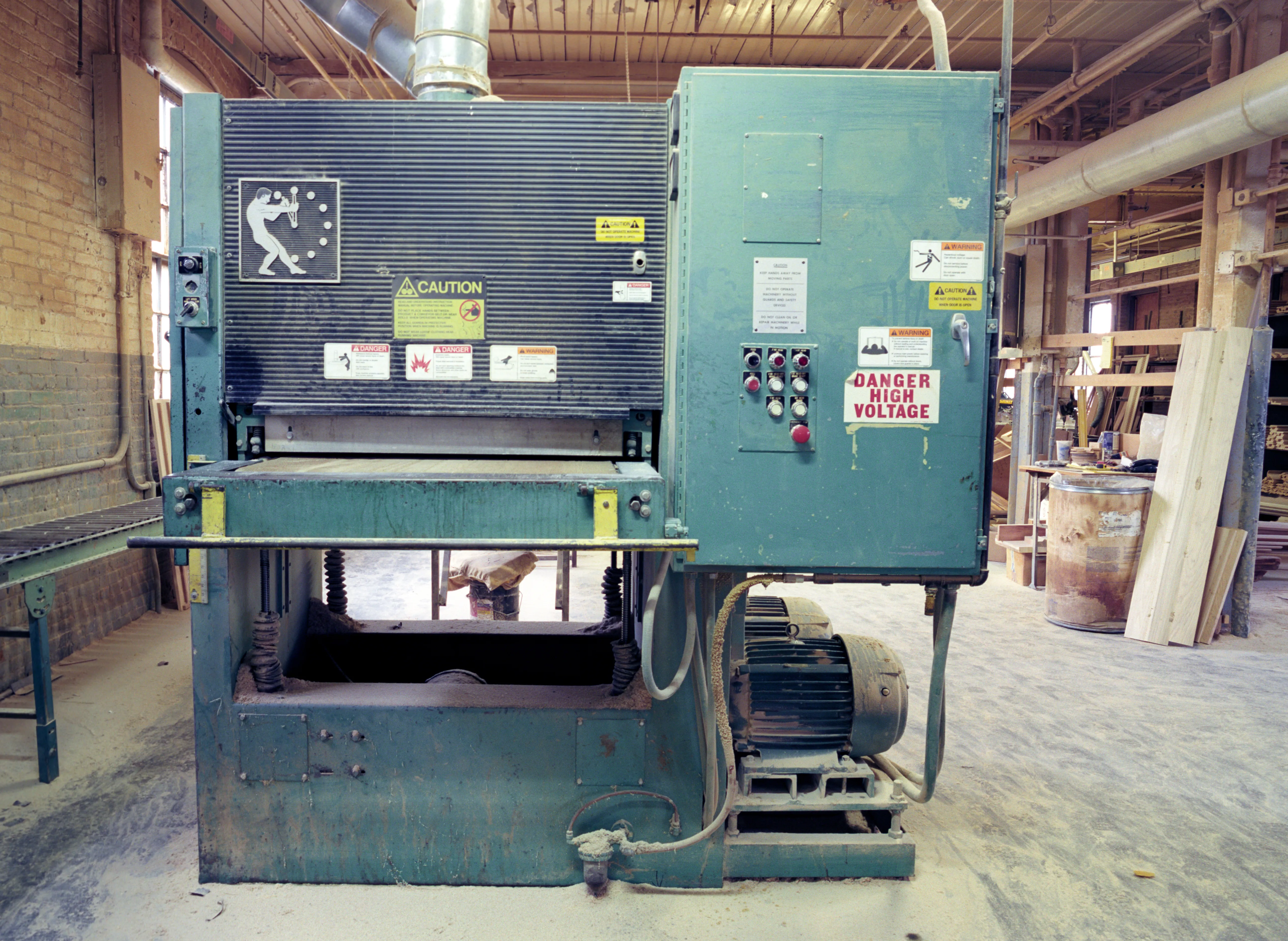
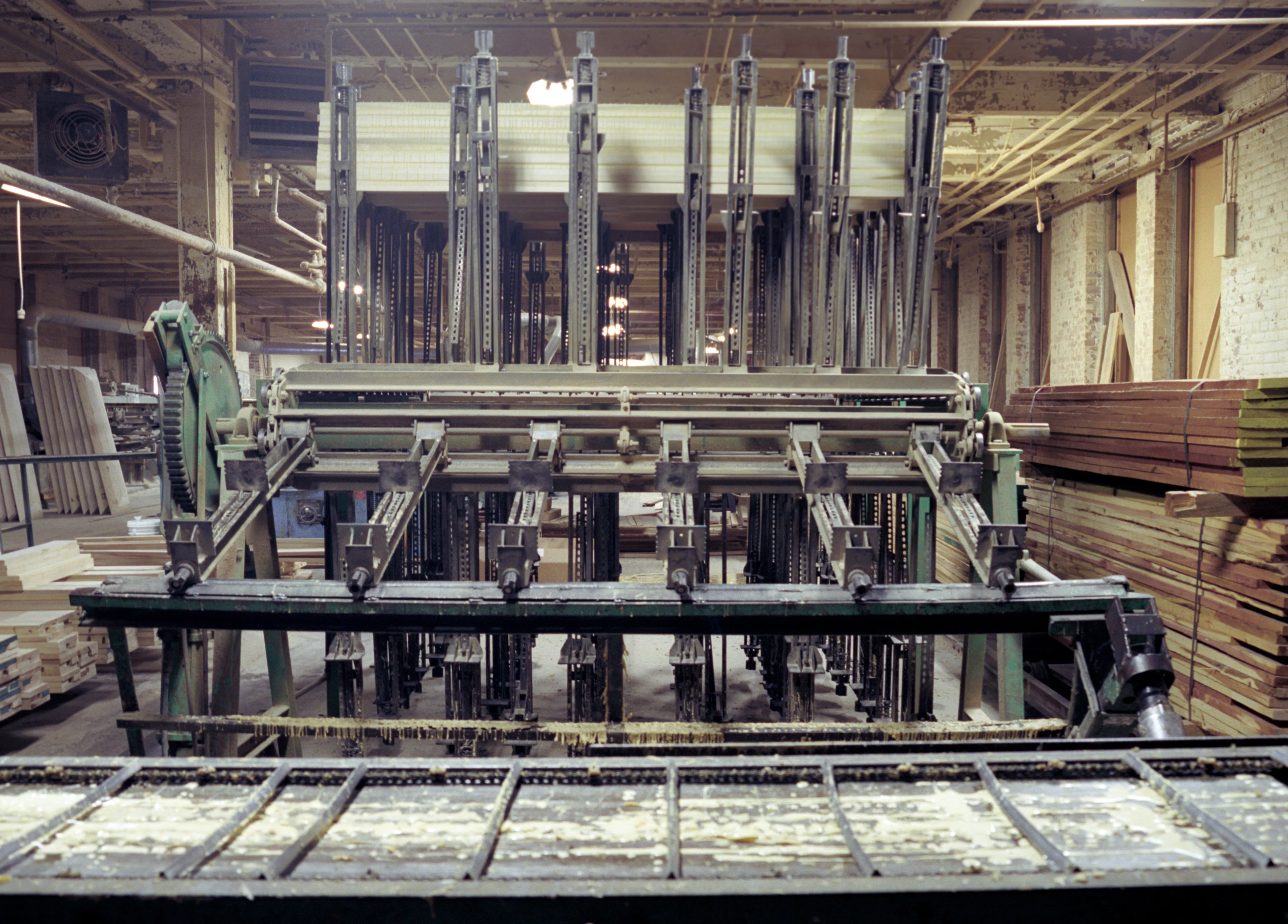
Me? I don't know. I'm building a new house in Vermont — a retirement house — now. But, you know, I'll probably keep my hand in.
Well, that's the unfortunate part. I educated them out of the industry. I sent them all to really good schools. One's an architect. The oldest is a plastic surgeon. And she married a multi-millionaire anyway, so she doesn't even need the money. It's ridiculous. She's the smartest one of the bunch. It's just as easy to love a rich one as a poor one. That's what my mother used to say.
And the baby — she was working for me for a while. She was doing a good job, but she decided… she's now a buyer for Macy's corporate in New York. Well, she liked fashion.
And the architect — he was down here this weekend, building some specialty vanities. He works for an architectural firm there, but he still makes things on his own. So he keeps his hand in. In Manhattan it's mostly large flats — people knocking walls down to make even larger flats. Twenty-five, thirty million dollars' worth of apartment, in a building that you don't own. That's the way it is. It's just money. It's only money.
Well, you know, I have all these people. I have to do something. That's why it continues. That is actually why it continues. Because I have all these people.