And when I crumble who will remember

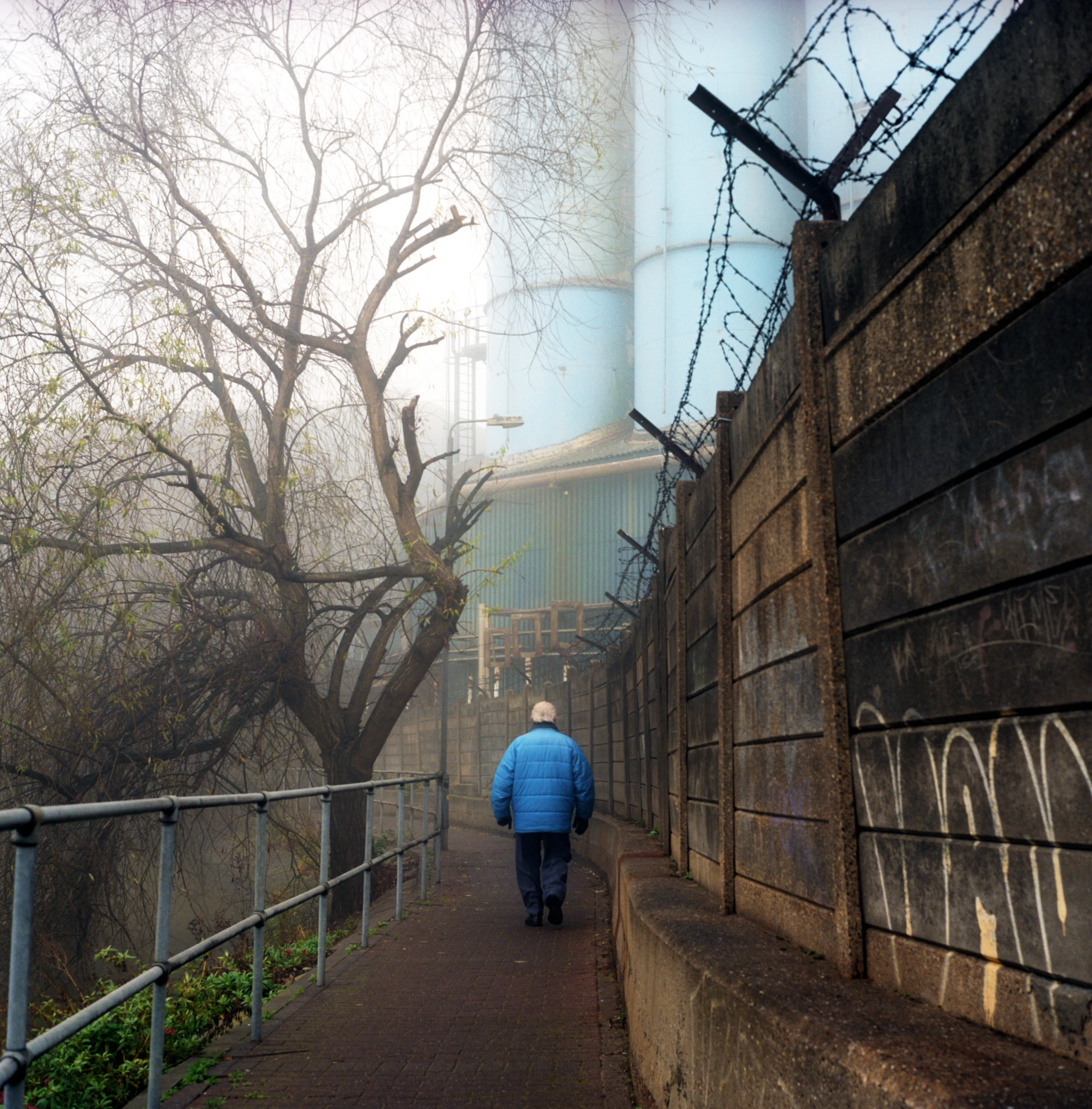
The encounter seemed as opaque as the weather.
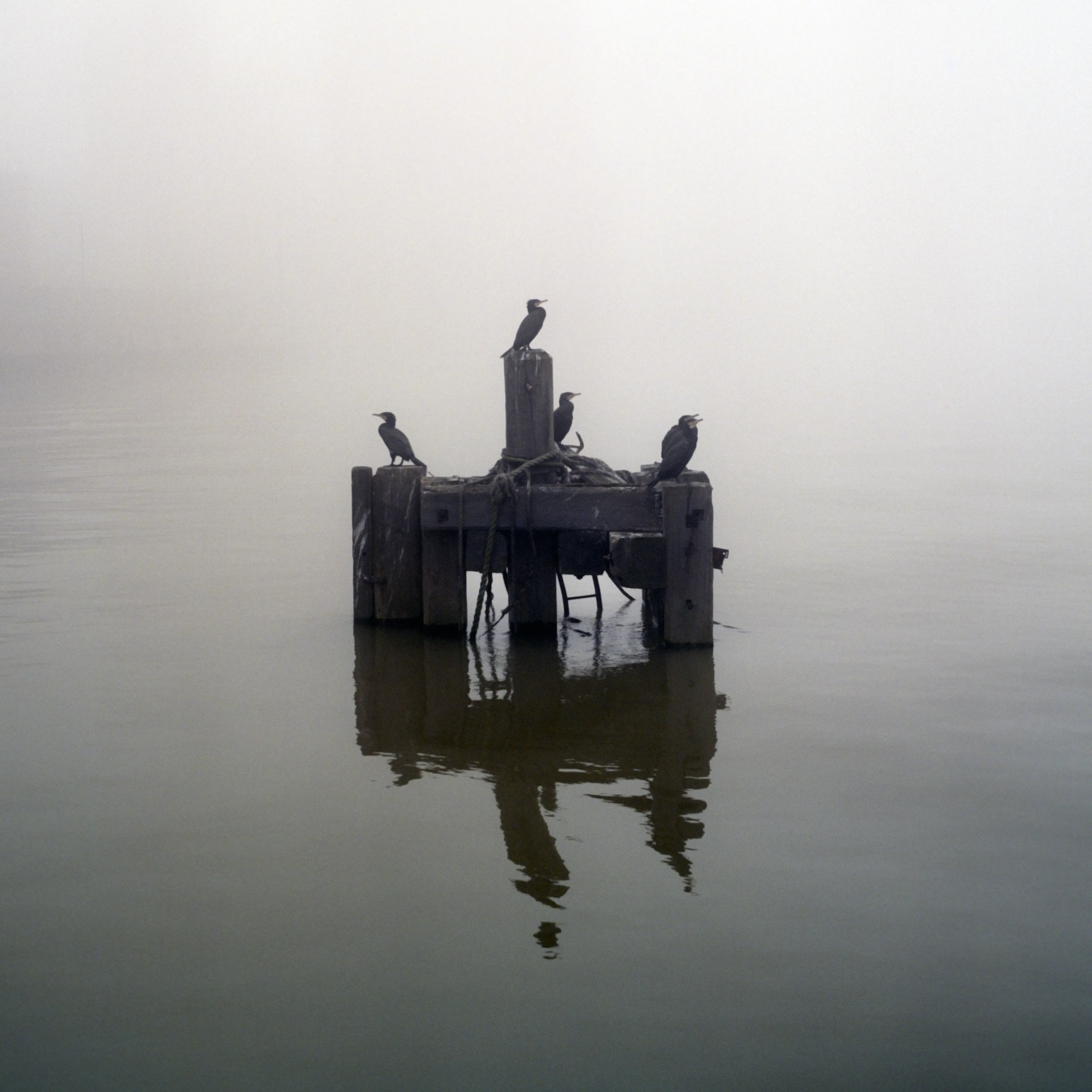
Four cormorants on a derelict wooden mooring cluster in flat, fog-bound water; river and horizon dissolved to silver, the birds and their reflection the only dark.

Two days before Christmas, a thick fog took the working reach of the Thames below Greenwich — coaling cranes over black water, derelict barges, the edgeland where the city frays to mud and scrub. I walked it with two cameras and a handful of film, somewhere between witness and trespass; the morning's one human encounter proved as opaque as the weather. I have always loved these fugitive spaces — the deserted riverbank, the thing left where it lies, the place that keeps nothing for long.

The written account of the morning →
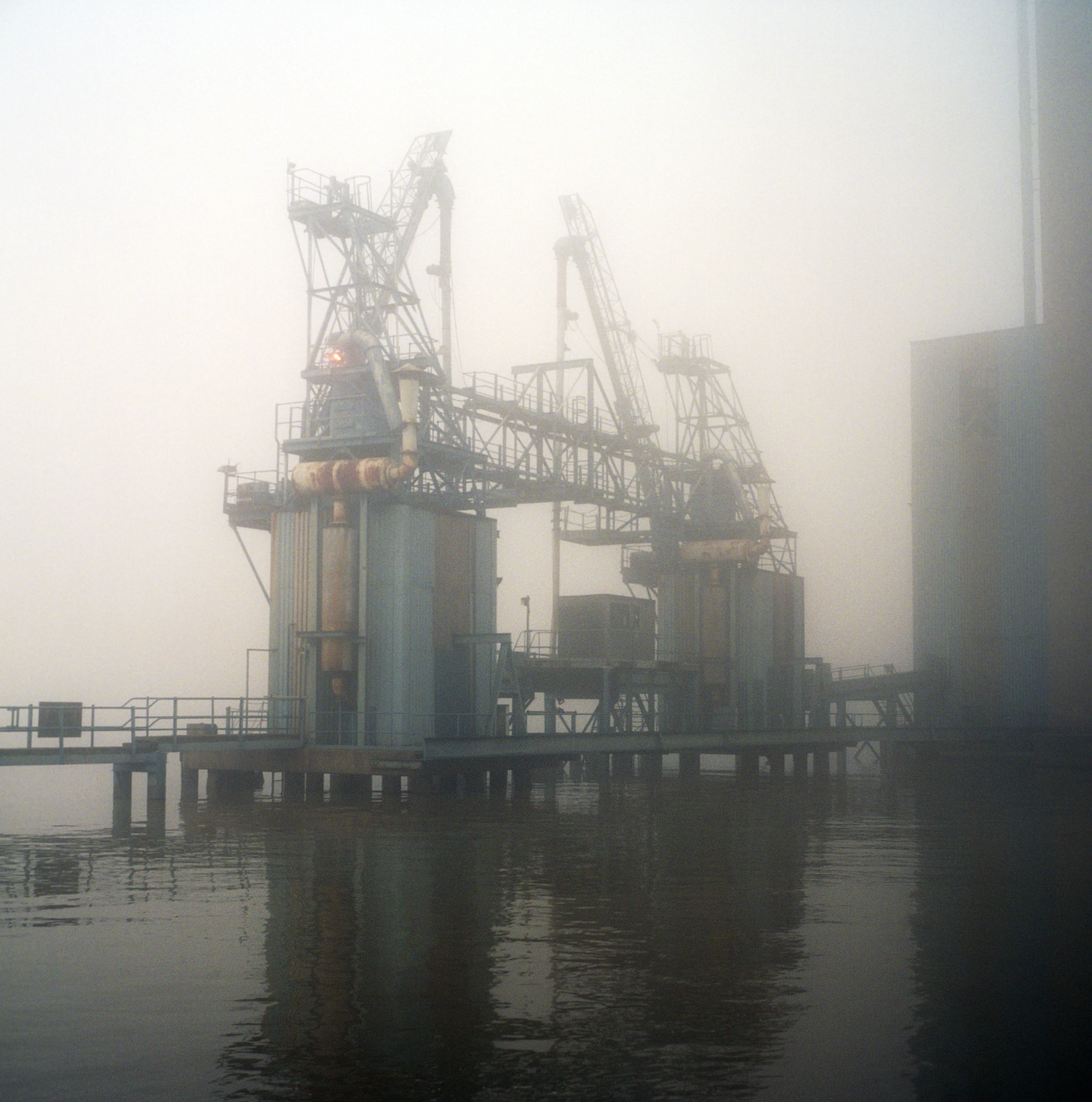
Disused coaling cranes and loading gantries rising over still black water, dissolving into fog; a single red warning light glows on the structure.
Approach the machine
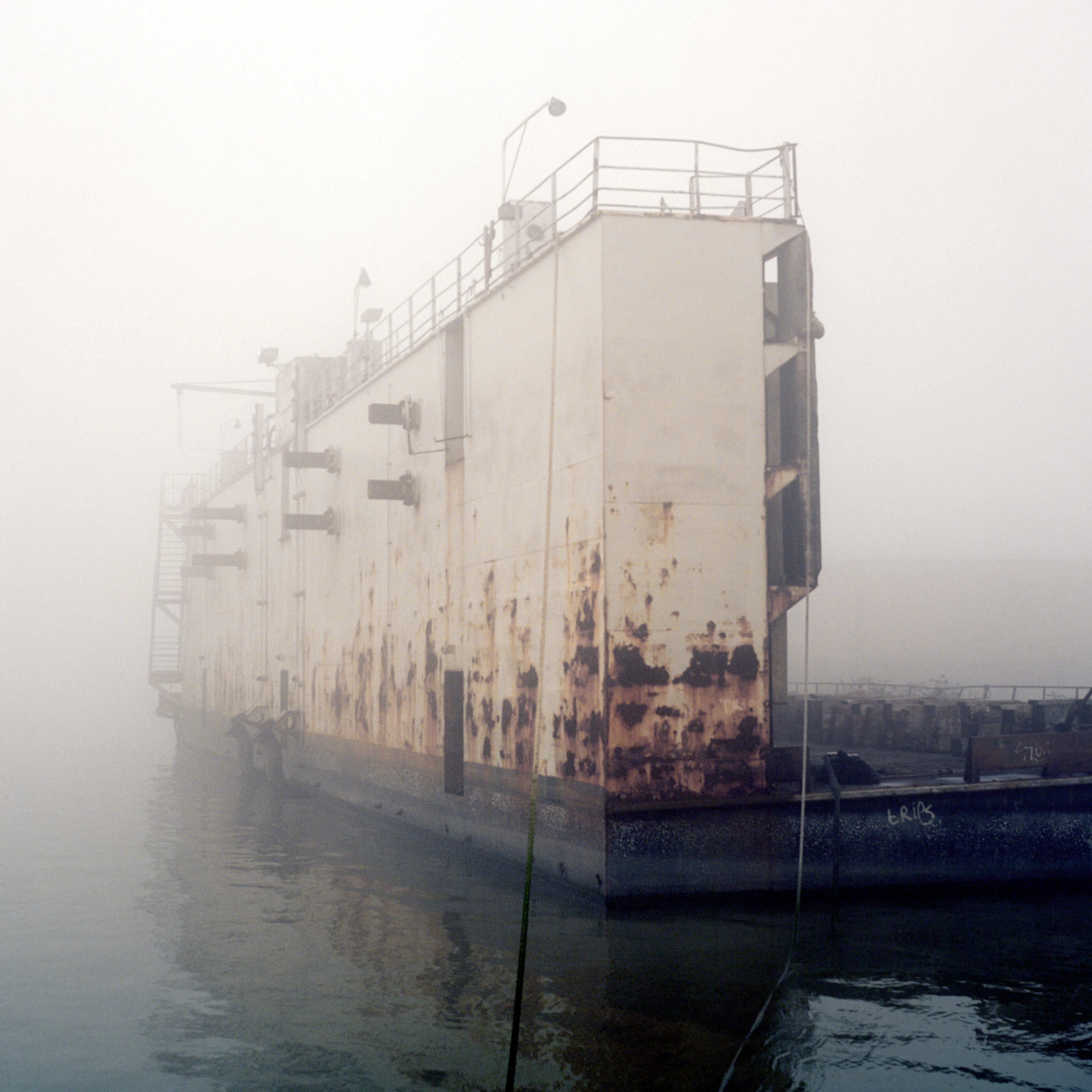
A rusted derelict barge moored in fog, its far end dissolving into white nothing over the water.
Mysterious slab
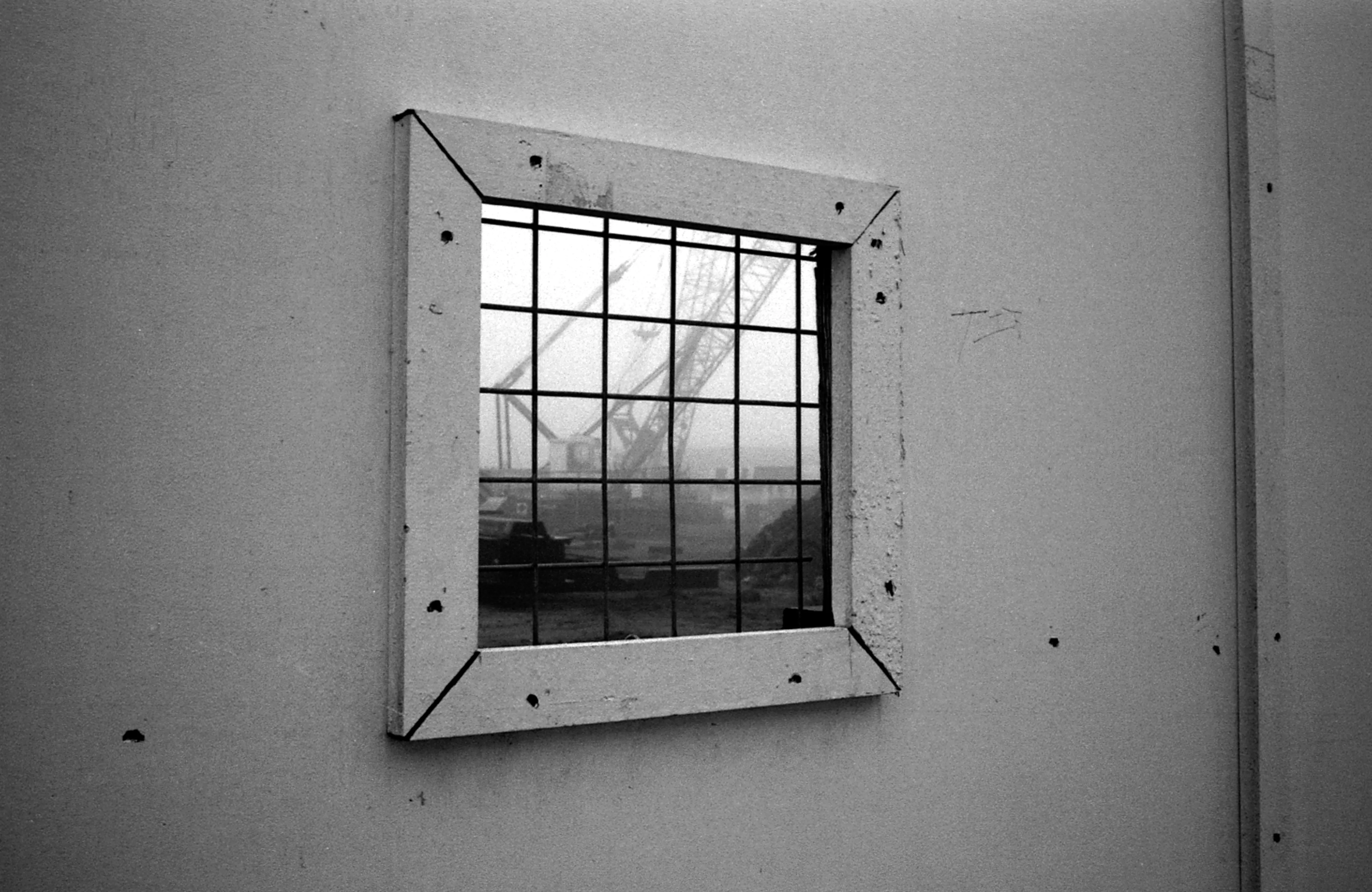
Black-and-white — a barred window in a pale industrial wall, looking out onto fog and faint structures beyond.
The foggy future
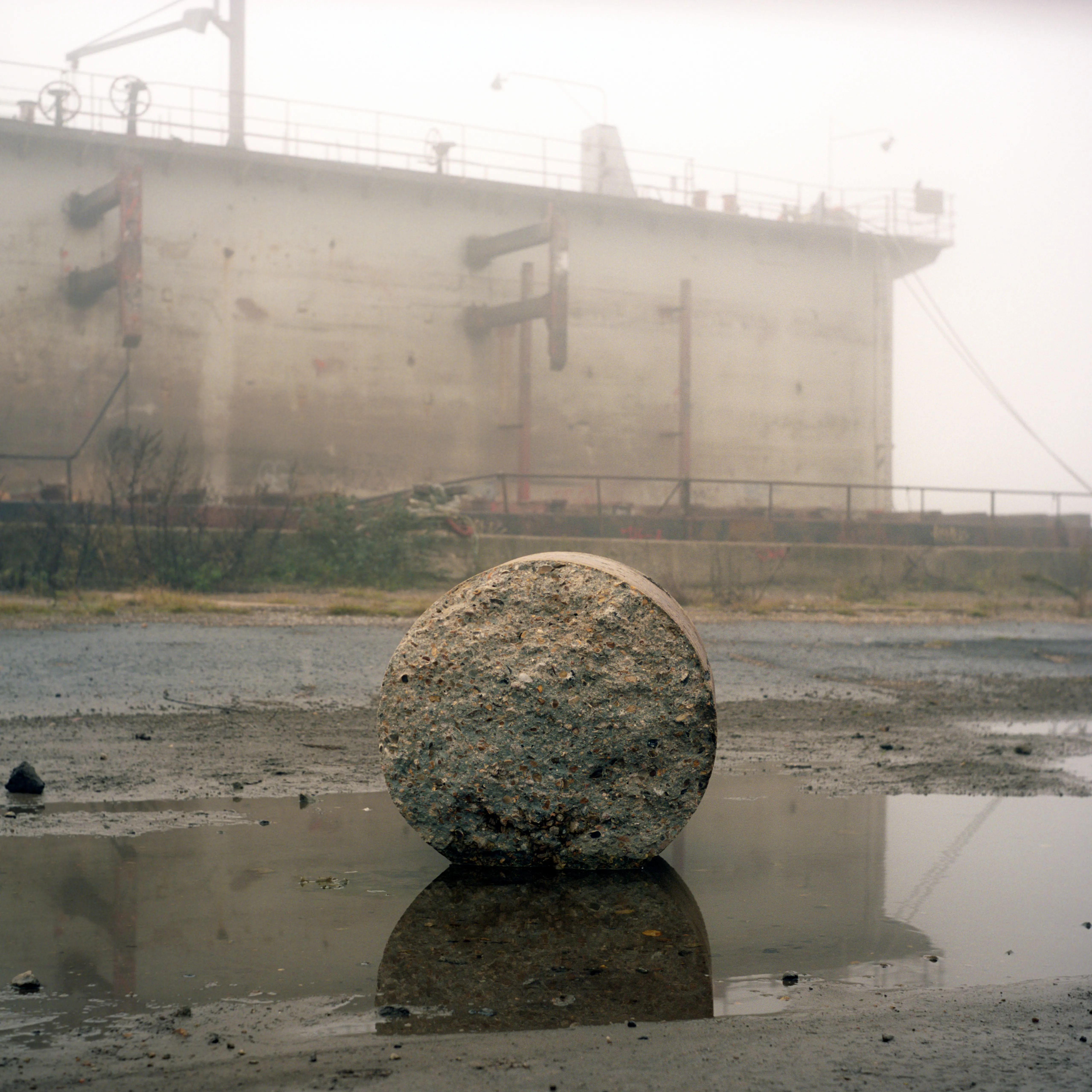
A large spherical buoy left on the muddy tidal foreshore, a rusted hull behind it, reflected in shallow water.
Left where it lies
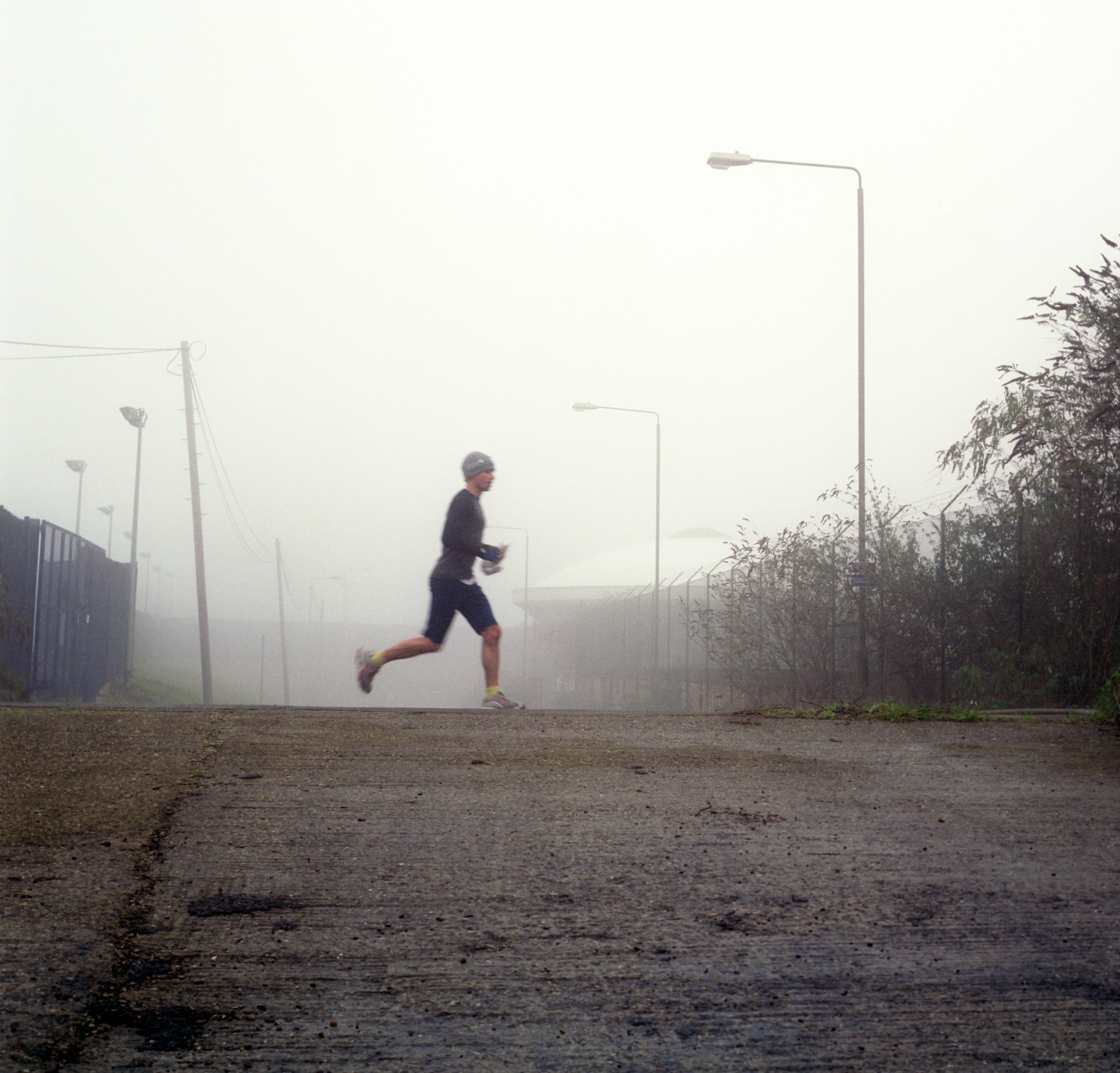
A lone runner mid-stride on an empty fog-bound road, streetlamps fading into the mist behind.
Each man hears as the twilight nears
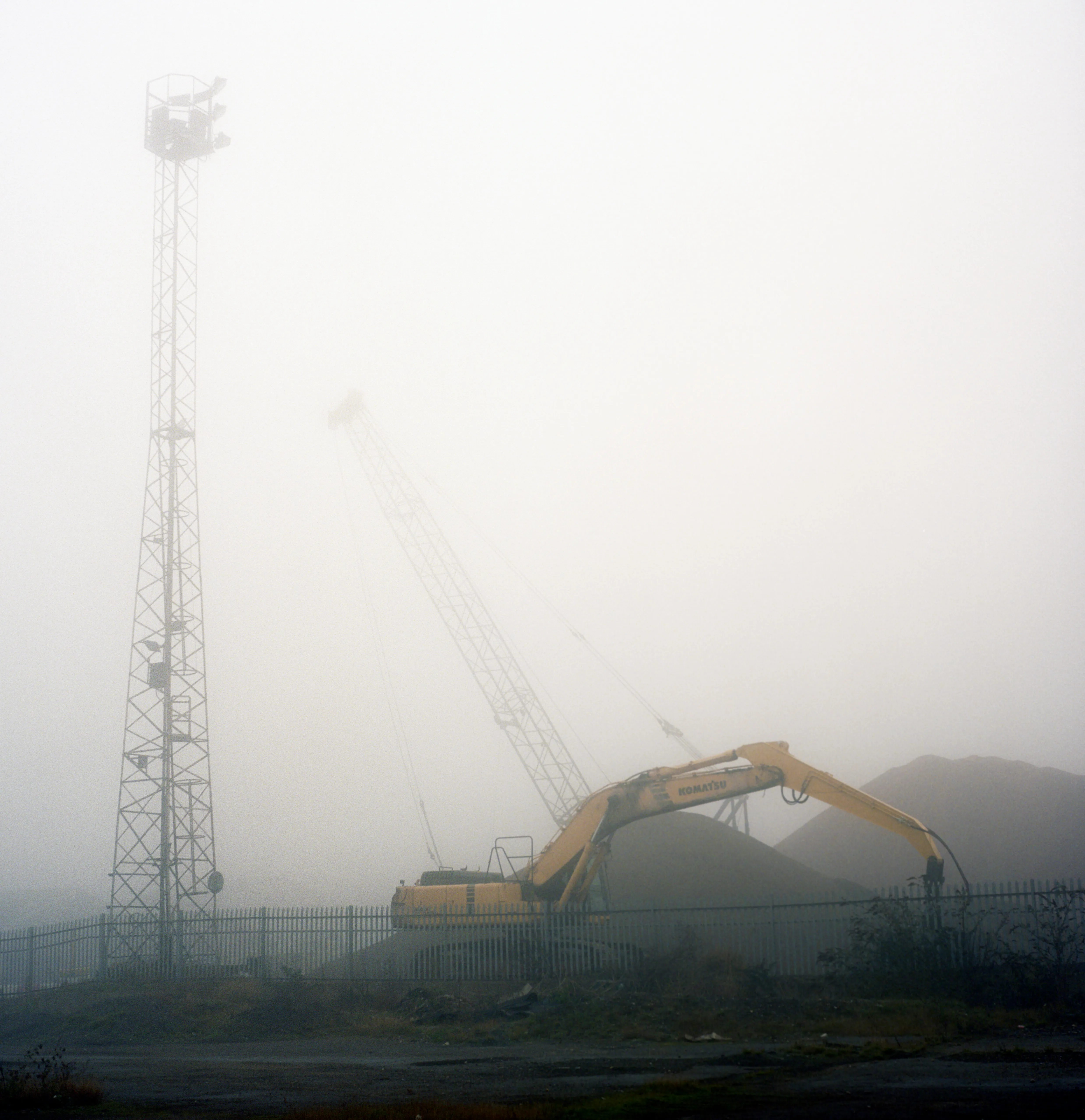
A long-reach excavator paused beside a dark spoil heap in heavy fog, a floodlight mast and a ghosted crane jib behind it.
The work waits
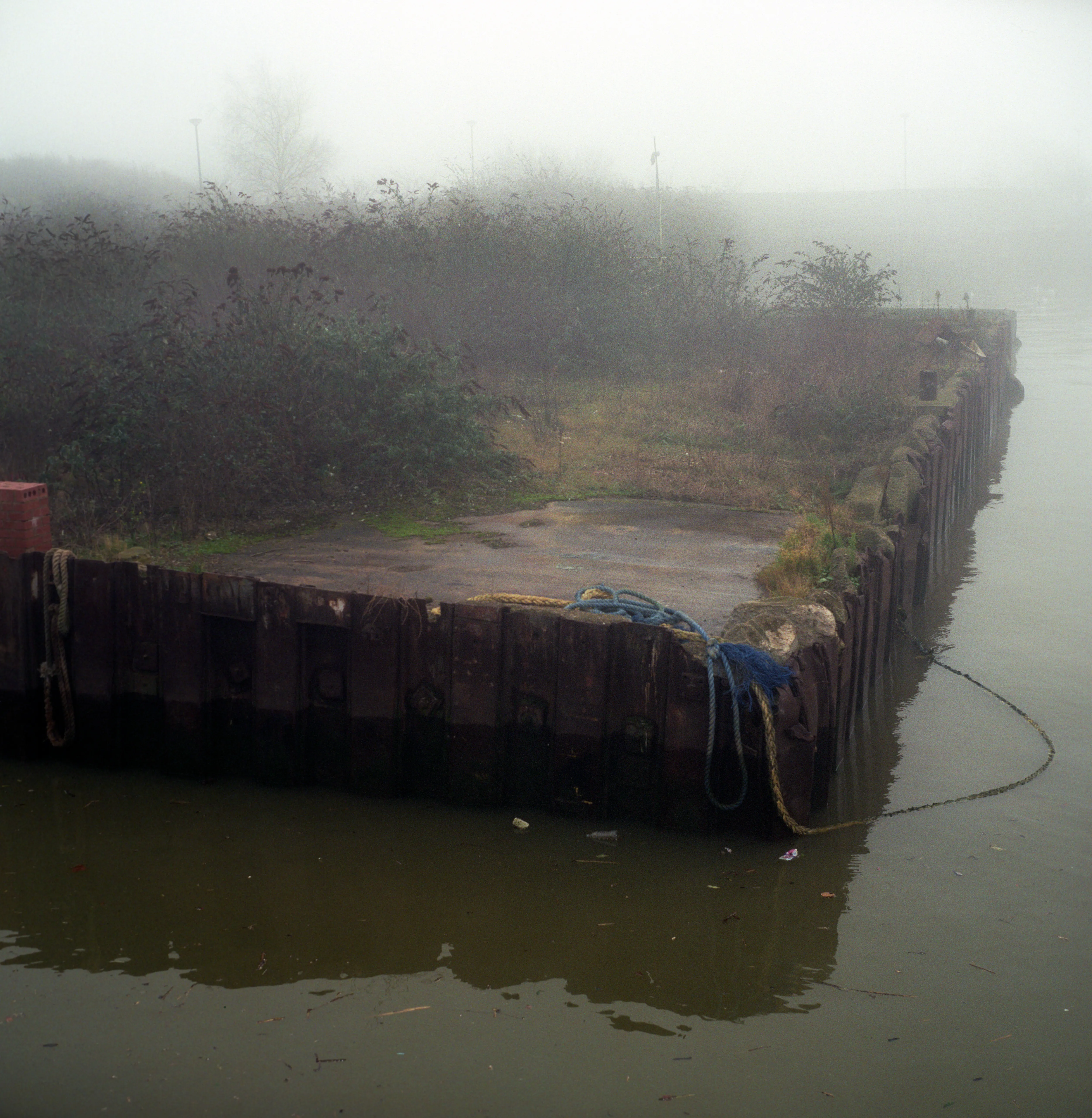
A rusted iron quay edge with coiled blue rope and a trailing mooring chain; scrub and bramble reclaiming the bank above, all softened by fog.
Secret landing
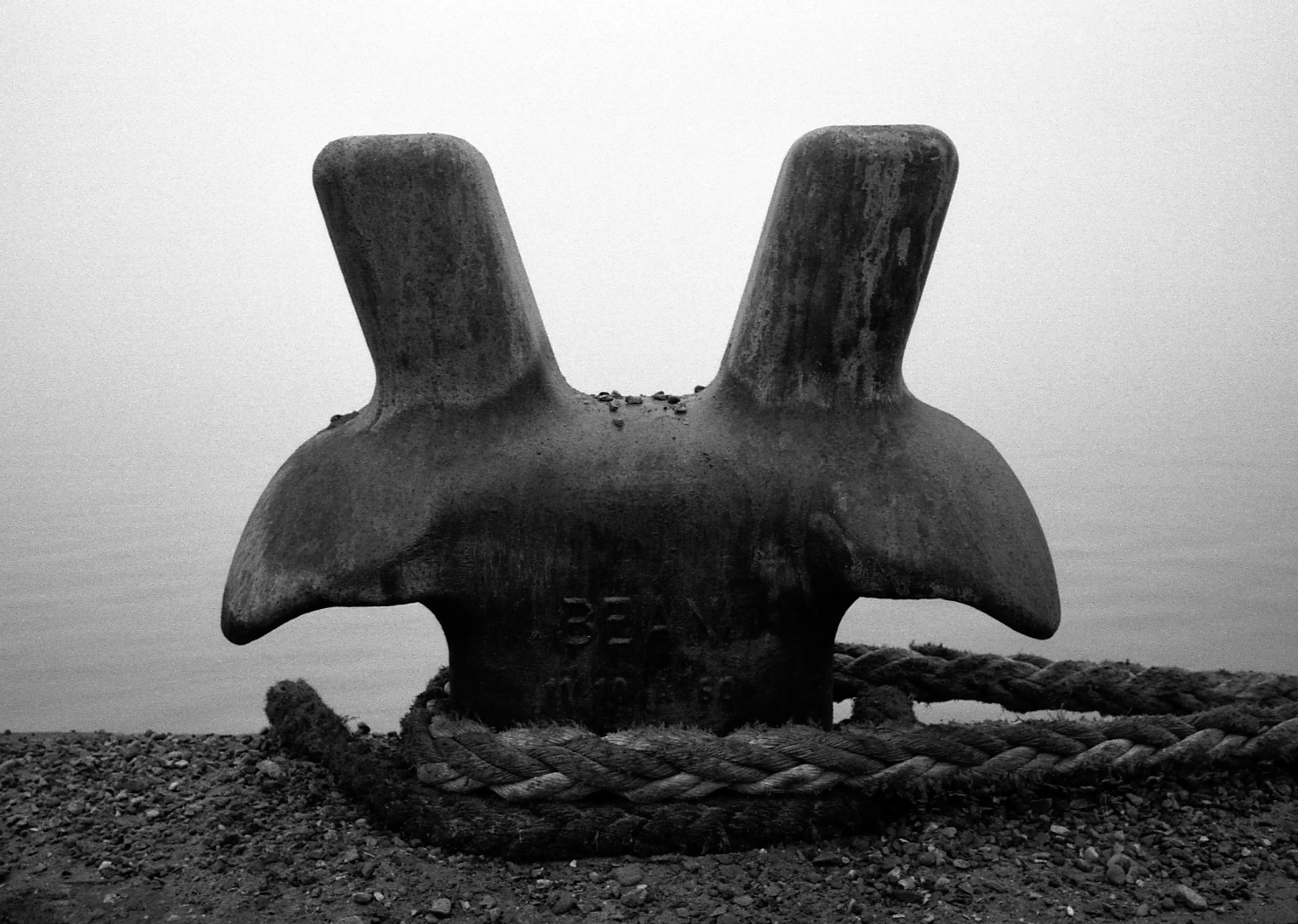
Black-and-white — a heavy mooring bollard with thick knotted rope coiled at its base on a shingle bank by still water.
Lifeline
A solitary figure in a blue coat walking away down a misty riverside path, a bare tree and a barbed-wire-topped wall alongside.
Toward